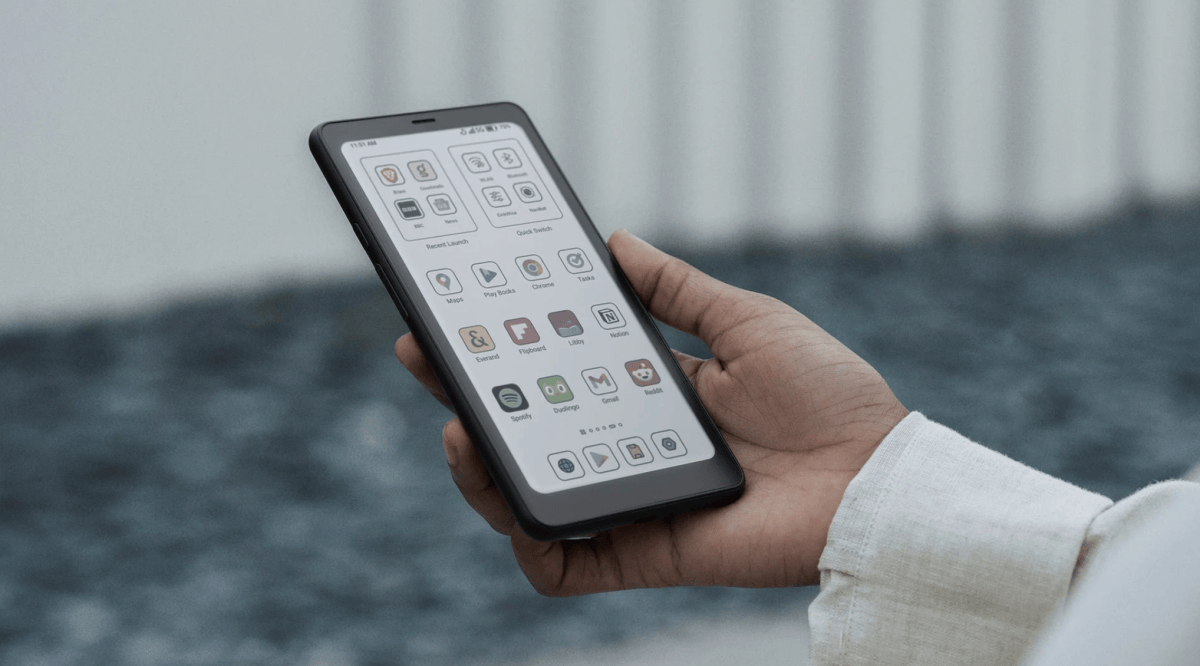
Onyx Electronics, the Chinese hardware maker behind the Boox brand, released the Palma 2 Pro as a direct challenge to smartphone reading habits. The $400 device pairs a 6.13-inch E Ink display with smartphone-grade processors and connectivity, positioning itself as a replacement for endless scrolling on traditional phones.
The Palma 2 Pro targets a specific consumer frustration. Readers have long struggled with reading long-form content on LCD-lit phones, which cause eye strain and trigger notification interruptions. The device eliminates both problems through E Ink technology, which renders text without backlight and operates as a dedicated reading tool rather than a distraction machine.
The hardware specifications reveal Onyx's engineering priorities. The 6.13-inch display uses Onyx's Gallery technology for faster page turns and smoother scrolling compared to earlier E Ink devices. Processing power comes from a Snapdragon processor paired with 8GB of RAM, enabling the device to run Android 13 and download apps from the Google Play Store. Battery life extends across weeks rather than days, a fundamental advantage of E Ink over LCD screens.
The $400 price point places the Palma 2 Pro between budget e-readers like the Kindle Paperwhite and high-end devices like the Kobo Sage. Onyx targets readers willing to pay a premium for a dedicated device without the cognitive load of notifications. The addressable market includes commuters, students, and professionals who consume significant volumes of long-form content.
Onyx competes in a crowded but fragmented e-reader ecosystem. Amazon dominates with the Kindle line through distribution scale and ecosystem lock-in. Kobo captures international markets and readers seeking open systems. Onyx occupies a niche position, emphasizing advanced features and Android flexibility that appeal to tech-forward readers. The company has quietly built a loyal customer base among developers and open-source advocates.
The Palma 2 Pro's significance extends beyond hardware specs. It represents growing consumer recognition that phones function poorly for extended reading. This shift accelerates as attention spans fracture under algorithmic pressure. Readers increasingly segment their devices by function. Reading-dedicated hardware becomes justified when the alternative means constant distraction management.
The device does not cannibalize phones entirely. Instead, it complements them by capturing reading time that currently happens on phones despite poor ergonomics and eye strain. Use cases cluster around public transportation, waiting rooms, and nighttime reading where blue light disruption matters. The Palma 2 Pro serves readers already considering e-readers but hesitant about Kindle ecosystem dependence.
Onyx's business model differs from Amazon's subsidy-through-services approach. The company profits from hardware sales alone, avoiding content lock-in strategies. This positions Onyx as the open-source choice for e-reader consumers, though it forgoes the revenue streams Amazon captures through Kindle Unlimited and Kindle Direct Publishing.
The Palma 2 Pro launch signals Onyx's confidence in premium positioning. The company invests in feature parity with competitors while maintaining differentiation through software flexibility. As smartphone reading fatigue grows, dedicated e-readers transition from niche luxury to mainstream productivity tool. Onyx plays to win this transition by offering escape routes from the phone's gravitational pull.