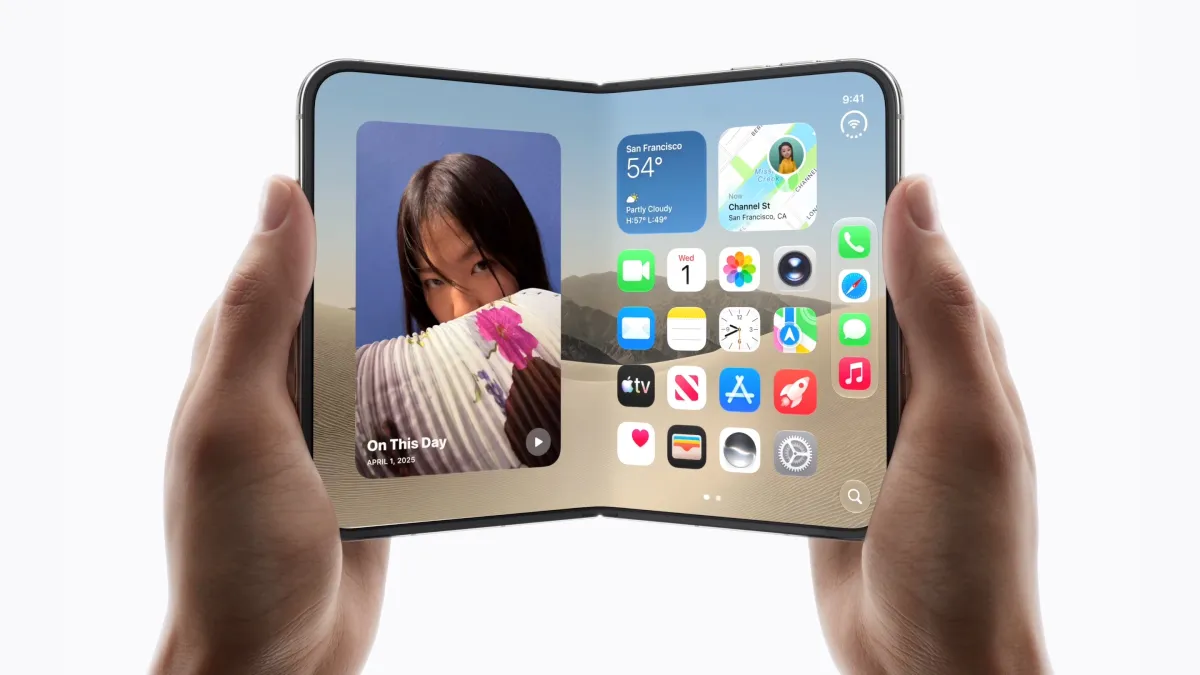
Apple's iPhone Duo launch has triggered a wave of creative app development that showcases the foldable device's unique affordances. Developers are experimenting across categories, from nostalgic utilities to practical tools, demonstrating that the dual-screen form factor opens genuine new use cases rather than simply replicating existing iPhone functionality.
The range of applications speaks to the versatility of the foldable format. Retro cassette player apps leverage the dual screens to recreate vintage hardware interfaces, with one screen mimicking physical controls and the other displaying visual feedback. Virtual notebook applications spread content across both displays, allowing users to view notes on one side while writing on the other, creating a natural workflow that mirrors physical paper notebooks.
Flight tracking apps benefit from the expanded real estate, presenting route maps on one screen while displaying flight data, gate information, and passenger details on the secondary display. This parallel information architecture reduces the need for constant tab-switching or modal navigation patterns that plague single-screen flight apps. Even whimsical creations like digital toaster apps demonstrate that developers view the foldable form factor as a playground for reimagining everyday objects with interactive features.
The iPhone Duo represents Apple's entry into the foldable market after years of Samsung dominating with its Galaxy Z series. Unlike Samsung's approach of creating a phone that folds into a tablet, Apple's design philosophy embraces the dual-screen form factor as a distinct device category with its own interaction paradigm. This positioning creates both opportunity and challenge for developers accustomed to designing for single, rectangular screens.
The diversity of experimental apps indicates developers recognize genuine value in the expanded display configuration. Rather than treating foldable as a marketing gimmick, builders explore how dual screens fundamentally change information architecture, workflow patterns, and user engagement. Apps like split-screen productivity tools, side-by-side reference browsers, and dual-input gaming experiences become not just possible but natural on the iPhone Duo.
This developer enthusiasm matters for Apple's long-term foldable strategy. The iPhone Duo succeeds only if the ecosystem embraces it as more than a novelty. Early creative experiments establish proof points that the form factor solves real problems and enables experiences impossible on traditional devices. As developers build confidence in foldable design patterns, subsequent iPhone generations will benefit from mature tool chains and established best practices.
The creative applications also create marketing narratives that extend beyond Apple's own messaging. User-generated innovation demonstrates that the iPhone Duo isn't just an engineering achievement but a catalyst for rethinking app design fundamentally. Whether these experimental apps find mass adoption matters less than their role in establishing the foldable category as legitimate and innovative, laying groundwork for broader market acceptance.