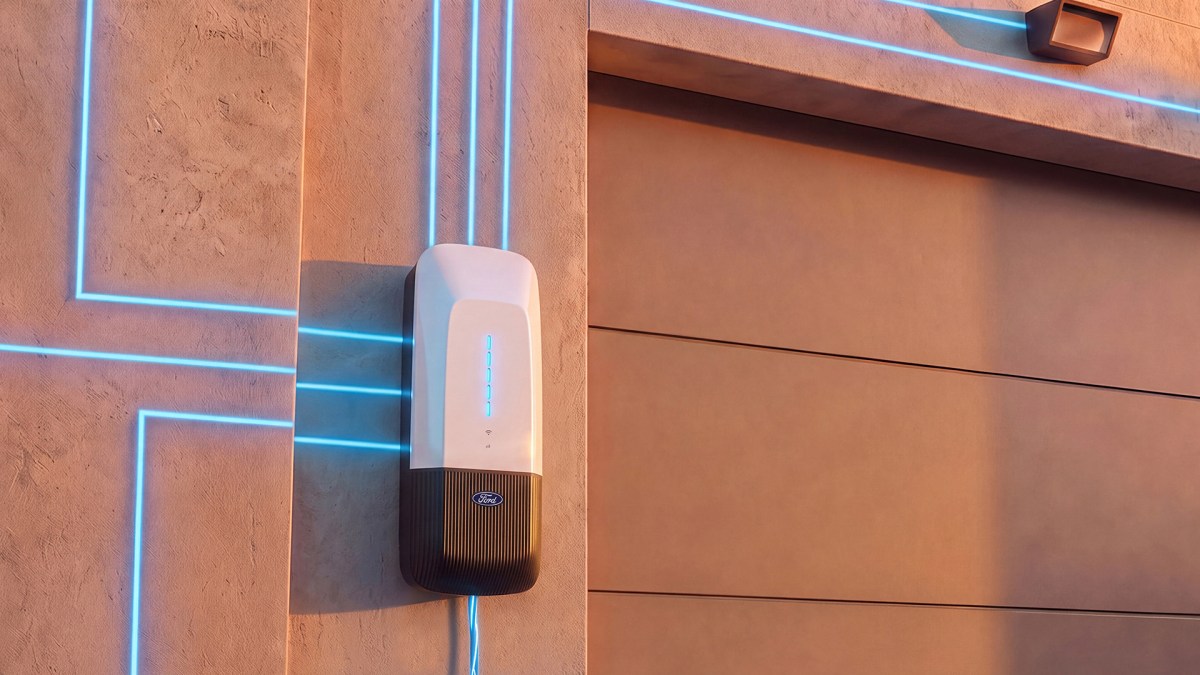
Ford has introduced two new bidirectional chargers designed to enable vehicle-to-home (V2H) and vehicle-to-grid (V2G) capabilities, positioning the upcoming Ford Fathom as the entry point for Americans seeking affordable home power integration with electric vehicles.
The new chargers represent Ford's bet on democratizing home energy resilience. The Fathom, expected to launch as Ford's cheapest EV offering, will ship with access to this bidirectional charging infrastructure. This move directly challenges Tesla's dominance in the EV-to-home energy space, where the company has dominated with premium pricing and proprietary systems.
V2X technology lets EV owners use their vehicle battery as a backup power source during outages or sell excess power back to the grid during peak demand. Ford's approach lowers the barrier to entry by bundling charger compatibility into a mass-market vehicle. The strategy mirrors how Tesla democratized premium EV features through Model 3 and Model Y rollouts, except Ford targets affordability from day one.
The Fathom launch carries weight in an increasingly crowded EV market. General Motors, Volkswagen, and emerging Chinese automakers like BYD compete aggressively on price and range. Ford's emphasis on V2X capability before the Fathom hits showrooms signals the company recognizes that EV buyers, especially price-conscious ones, want practical home energy benefits beyond commuting. Home backup power ranks high in consumer surveys as a reason to buy EV batteries.
Ford's charger deployment also reflects infrastructure maturing faster than predicted. ChargePoint, Electrify America, and other networks built out physical charging. Now the focus shifts to what happens when the vehicle comes home. Bidirectional chargers require compatible home electrical systems and utility agreements, but Ford's two-charger offering gives buyers options based on existing home infrastructure.
The company hasn't disclosed pricing for the Fathom or the chargers, but undercutting Tesla's $5,000-plus Powerwall accessory pricing appears central to Ford's strategy. A Fathom priced under $30,000 with charger compatibility could capture buyers who dismissed EVs as too expensive for practical home integration.
Regulatory tailwinds help Ford's timing. The Federal Energy Regulatory Commission has moved toward standardizing V2G protocols, reducing automaker fragmentation. States like California mandate V2X readiness in new EV models starting next year. Ford's chargers likely meet emerging standards, reducing retrofit risk for early adopters.
Competition intensifies as other legacy automakers catch up. Hyundai and Kia already offer V2L (vehicle-to-load) on Ioniq and EV9 models. BMW and others work on V2H systems. But Ford enters with a low-cost vehicle and grid-ready chargers, a combination few competitors offer simultaneously.
The Fathom sits at the intersection of EV adoption, home resilience, and grid modernization. Ford's chargers enable customers to participate in demand response programs, lower electricity bills, and maintain power during outages. These aren't luxury features anymore. They're becoming baseline expectations as EV penetration climbs.
Ford's move forces legacy automakers to bundle home energy benefits into affordable offerings. Tesla faces pressure to justify Powerwall pricing against cheaper EV-native alternatives. The Fathom era begins when EV buyers expect their car to do more than drive.