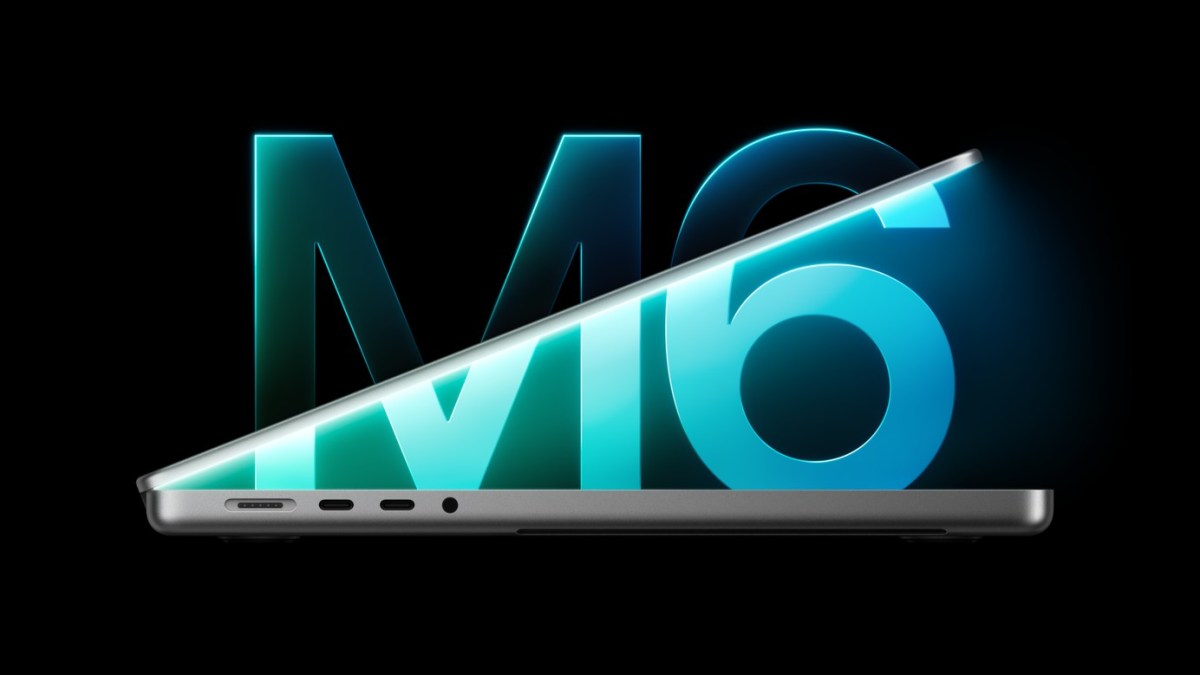
Apple released a redesigned 14-inch MacBook Pro featuring its new M6 chip, marking the latest iteration in the company's transition away from Intel processors. The laptop delivers 24 hours of battery life, a substantial jump from previous generations, alongside support for Wi-Fi 7 and Bluetooth 6 connectivity standards.
The M6 chip represents Apple's continued refinement of its proprietary silicon strategy, a move that began in late 2020 with the M1 processor. This generational upgrade underscores Apple's vertical integration approach, allowing the company to optimize hardware and software in tandem while reducing dependency on external semiconductor suppliers. The M-series chips have proven competitive with Intel and AMD offerings, particularly for developers and creative professionals working in video production, music engineering, and machine learning.
Battery life has become the defining battleground for laptop manufacturers competing in the premium segment. Apple's claim of 24 hours marks an aggressive positioning against rivals like Dell XPS, Lenovo ThinkPad, and Asus VivoBook lines. The extended battery life likely benefits from both M6 efficiency gains and larger power management improvements in the MacBook Pro's industrial design.
The Wi-Fi 7 and Bluetooth 6 adoption reflects Apple's playbook of integrating cutting-edge wireless standards into its products. Wi-Fi 7 delivers substantially faster throughput and lower latency compared to Wi-Fi 6, addressing the needs of professionals handling large files and real-time collaboration workflows. Bluetooth 6 improvements enhance connectivity range and stability, benefiting peripheral users working with multiple devices simultaneously.
For the developer community, the M6 MacBook Pro maintains compatibility with existing software while delivering performance gains. This backward compatibility protects the installed base of users running professional applications like Final Cut Pro, Logic Pro, Xcode, and third-party tools from Adobe and JetBrains.
The 14-inch form factor occupies a sweet spot between the 13-inch MacBook Air and larger 16-inch MacBook Pro models. This positioning allows Apple to capture professionals who want portability without sacrificing screen real estate for content creation work.
Pricing and exact specifications beyond battery life and connectivity remain central factors for purchasing decisions among enterprise buyers and individual professionals. Apple's MacBook Pro line traditionally commands premium pricing, typically ranging from $1,500 to $3,500 depending on configuration and storage options.
The timing of this release comes amid broader industry shifts toward generative AI integration in productivity software. MacBook Pro buyers increasingly evaluate processors not just for traditional workloads but for on-device AI capabilities. The M6 chip's architecture likely includes dedicated neural processing units optimized for running large language models and machine learning inference locally.
For enterprise IT departments evaluating refresh cycles, the 24-hour battery life and wireless standard upgrades offer tangible justification for hardware replacement. Creative professionals relying on intensive rendering and encoding tasks will scrutinize the M6's actual performance benchmarks against previous M5 generations and competing processors from Intel and AMD.