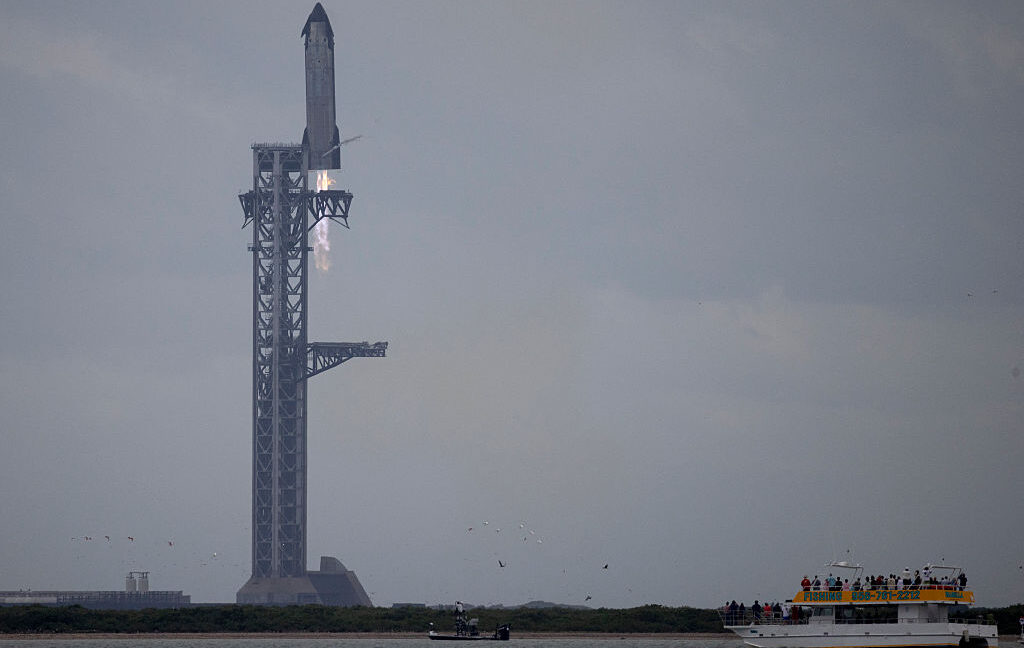
SpaceX caught its Starship upper stage with the launch tower's mechanical arms on Saturday, marking the first time the company has returned both the upper stage and booster safely to the launch site after an orbital flight.
The upper stage descended from orbit, flew horizontally until the final moments, then ignited three Raptor engines to reorient vertically. Two mechanical arms on the tower, extending from what SpaceX calls "chopsticks," caught the rocket using two small nubs protruding about one foot from either side of the vehicle.
The achievement represents a step toward rapid rocket reuse. SpaceX currently manufactures a Starship upper stage every three weeks at its South Texas facility. The factory was sized to produce one every three days. The company has five Starships in advanced development at Starbase and components for a dozen more.
SpaceX founder Elon Musk previously discussed build targets that sounded unrealistic five years ago, according to the report. Within a few years, the company aims to fly Starship 135 times annually, then thousands of times.
The Space Shuttle, by contrast, achieved 135 flights over 30 years. Each orbiter cost an extraordinary amount to build, and NASA constructed only five that reached orbit. Heat shield refurbishment after each flight required painstaking work. At launch of the shuttle program, NASA projected costs of $25 per pound; actual costs ran closer to $25,000 per pound.
Saturday's catch demonstrated a proof of concept for rapid reuse. SpaceX will need to perfect the heat shield and increase the success rate of such landings over time.