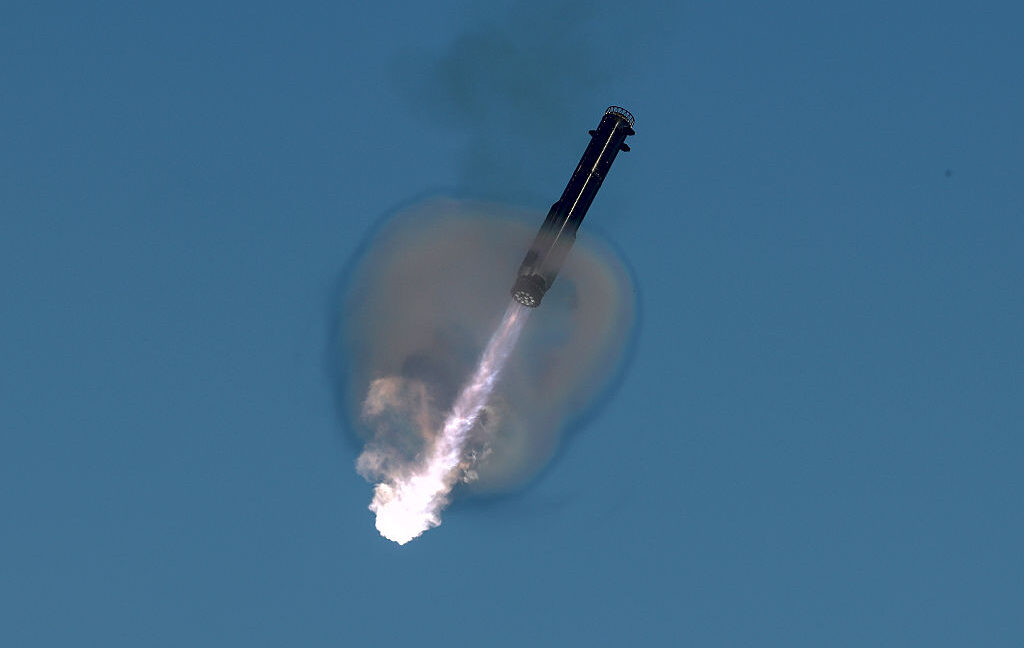
SpaceX launched Starship for its 15th test flight on Friday from South Texas, achieving a nominal orbit and deploying 26 Starlink V3 satellites about 40 minutes into flight. The upper stage ignited its Raptor engines and reached low-Earth orbit, marking the second time SpaceX has flown Starship into orbit.
The first stage booster, however, diverted into the Gulf of Mexico due to an unspecified issue rather than returning to the launch tower for capture as planned. SpaceX had intended to land and refly the latest version 3 booster but has not yet done so with this iteration.
SpaceX plans a potential historic catch of the upper stage on Saturday at approximately 3:15 pm local time if the vehicle passes a series of health checks in orbit and during reentry. The company has never attempted to catch Starship's upper stage before. If health checks fail, SpaceX can de-orbit the vehicle into an ocean.
The deployment of the 26 Starlink V3 satellites, each with solar panels stretching 60 meters when fully deployed, confirms Starship is now an operational orbital rocket. SpaceX says the vehicle is the largest and most powerful machine humans have launched into space. The company's next challenge is making Starship reusable and increasing its flight rate.
SpaceX has made upgrades to Starship's heat shield for this flight. The company applied learnings from September's test flight, adding retention mechanisms to tiles at highest risk of falling off during ascent and addressing plasma flow paths behind tiles. A large portion of the heat shield now uses a curved tile design intended to reduce heating in gaps between tiles.