Researchers have developed software called FLIP (Physics-based Learning for Imaging Planets) that uses neural network optimization techniques to reduce noise in James Webb Space Telescope images of exoplanets. The software models the NIRCam instrument on Webb with one million parameters and uses gradient descent to optimize how the telescope's physical properties are represented, then fine-tunes results on actual observations.
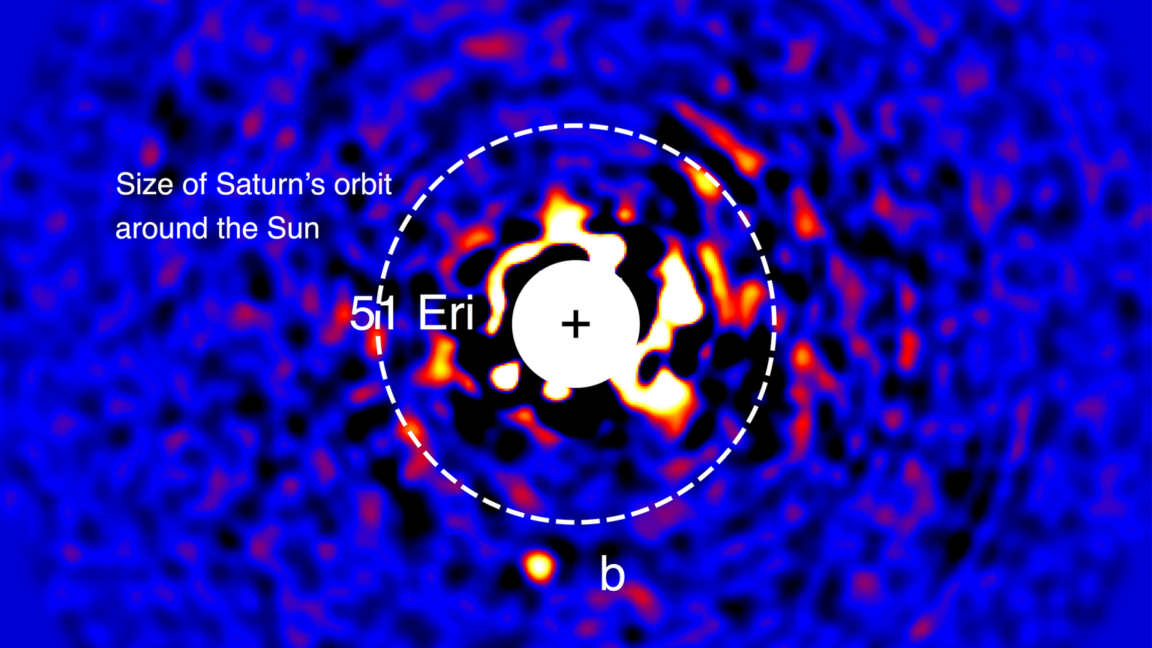
The approach boosts signal-to-noise ratios by 1.5 to 2 times across different observations, according to tests using Webb data from stars HIP 65426, 51 Eridani, and TYC 5899. At wavelengths used to detect carbon dioxide, the team spotted one exoplanet in Webb data for the first time. For TYC 5899, sensitivity improved by a factor of 15.
The optimization process runs on a current GPU in just over half an hour. The researchers say the lower noise levels should enable detection of dimmer, older, and lower-mass exoplanets that were previously undetectable. They also plan to modify FLIP to reveal where it makes the largest model adjustments, potentially providing insights into the telescope's hardware behavior.
The work appears in Nature in 2026.