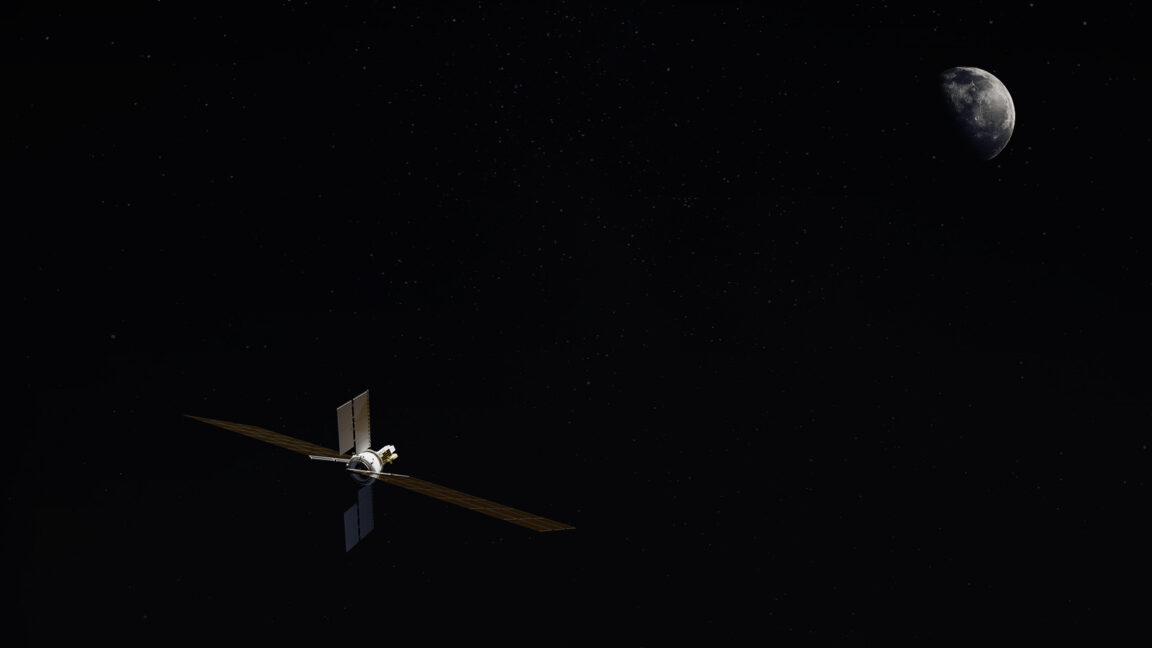
Robert, Ryan, and Kirby Carlisle left SpaceX to found Argo Space in late 2022, focusing on spacecraft rather than rockets. The three brothers are building in-space transportation infrastructure powered by water, which they plan to harvest from the Moon and other locations across the Solar System.
Argo's vision uses water not just as propellant but also as coolant and radiation shielding. The company flew its first demonstration mission, Navigator, in July on a Falcon 9 rideshare. One of the spacecraft's two solar arrays failed to deploy, leaving it power-negative and unable to test the propulsion system, though the team validated flight software, ground software, avionics, and structures.
The company's next-generation spacecraft, Chiron, weighs roughly 200 kg and can achieve more than 2 km/s of delta-v. Argo plans two Chiron missions in 2027, both carrying payloads for an undisclosed national security customer. The first targets low-Earth orbit on an undisclosed new commercial rocket; the second targets geostationary transfer orbit on a government-furnished launch vehicle. Robert Carlisle said the company could not wait for Falcon 9 availability, which he described as far out on a wait list.
Chiron splits water into hydrogen and oxygen gases using solar power, then burns them in a conventional rocket engine. This approach provides more thrust than ion thrusters while avoiding cryogenic storage complexity.
In September, Argo signed a deal with ispace to deliver ispace's Lunar Connect communication relay satellite to lunar orbit using Argonaut, a larger vehicle with a maximum payload capacity of 1,400 kg and maximum delta-v of 17 km/s per tank. Argo has raised $20 million to date and employs fewer than 30 people. Kirby Carlisle noted that spacecraft development requires less ground infrastructure than rockets, allowing Argo to test systems at its El Segundo, California facilities rather than requiring a dedicated test site like SpaceX's McGregor, Texas location.