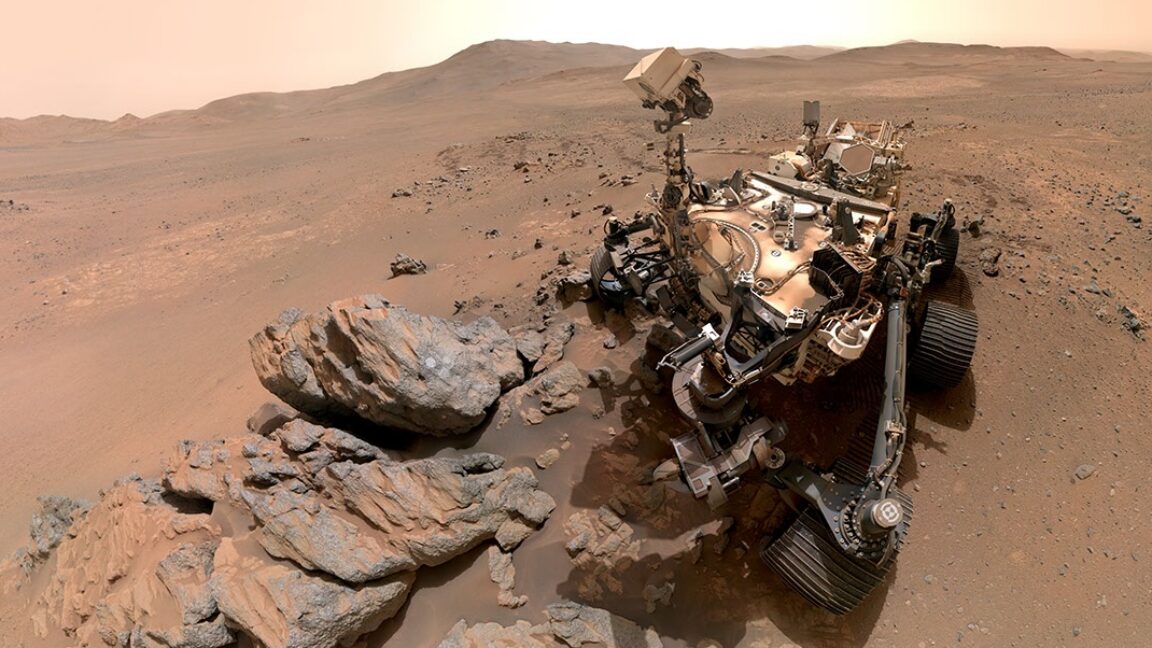
Perseverance and Odyssey, two of NASA's four active Mars missions, have suspended science operations after encountering separate technical issues.
Perseverance's primary UHF radio became unresponsive on October 30, triggering an automatic switch to a backup radio that NASA discovered was transmitting at about half its expected power output. The rover is now transmitting directly to Earth via X-band, which provides a significantly lower data rate than relaying through orbiters. NASA paused science operations out of an abundance of caution while investigating. The team is hopeful the rover could return to science by the end of November.
Odyssey's situation is more precarious. One of four reaction wheels stopped spinning in early November, leaving the orbiter with only two operational wheels after a first one failed in 2013. Odyssey needs at least three wheels to maintain proper orientation for its solar arrays and science instruments. Without three healthy wheels, the spacecraft must rely solely on hydrazine thrusters. Ground teams were previously optimistic Odyssey would have enough propellant to operate through at least the end of 2028, but engineers now estimate the spacecraft has enough hydrazine fuel to last one to two months if the reaction wheel issue cannot be resolved. Ground teams have had some initial success troubleshooting the failed wheel, with further testing necessary to determine if it is recoverable.
Both rovers are operating beyond their original design lifetimes. Perseverance is in its sixth year on Mars and recently broke the distance-traveled record for any vehicle on another planet. Odyssey arrived in orbit in 2001 and holds the record for longest-lived Mars mission.
NASA awarded Blue Origin a $700 million contract in September for the Mars Telecommunications Network, a dedicated orbiter to provide high-bandwidth connectivity at Mars by 2030. However, the project is on hold after Rocket Lab filed a protest with the Government Accountability Office over losing the bid. The GAO is expected to rule next month.