SpaceX caught its Starship upper stage mid-air at its Texas launch pad after the vehicle spent nearly a day in orbit on November 14, marking progress toward a fully reusable orbital rocket. The Super Heavy booster was lost at sea, though SpaceX has recovered that component on previous flights.
The same weekend brought contrasting news for United Launch Alliance, which suffered its first-ever total launch failure with the Vulcan rocket. ULA's setback affects the US Space Force and Amazon, which have booked some 70 Vulcan launches over the coming years.
ICEYE, a Finnish satellite developer valued at over $12 billion, announced plans to acquire Italian rocket maker Avio for more than $2.2 billion. The deal aims to create Europe's first vertically integrated end-to-end space company. Avio builds the Vega C rocket, capable of carrying up to 3.3 metric tons to low-Earth orbit. ICEYE manufactures radar surveillance satellites and sells imagery to commercial customers and national governments, including Ukraine. With SpaceX's Falcon 9 facing retirement, ICEYE needs alternative launch capacity. Vega C holds a healthy contract backlog from European governments but has not gained commercial traction.
NATO announced two initiatives on Tuesday. Starlift allows participating countries, Belgium, Canada, Finland, Germany, Italy, the Netherlands, Norway, Sweden, Turkey, the UK, and South Korea, to pool military launch requirements and secure slots on commercial rockets. The Global Data Marketplace will bolster military operations with commercial data and services. NATO's tech agency will offer about $2.7 billion in contracts over the next two years, including to commercial space companies, AI, cyber, and command-and-control networks.
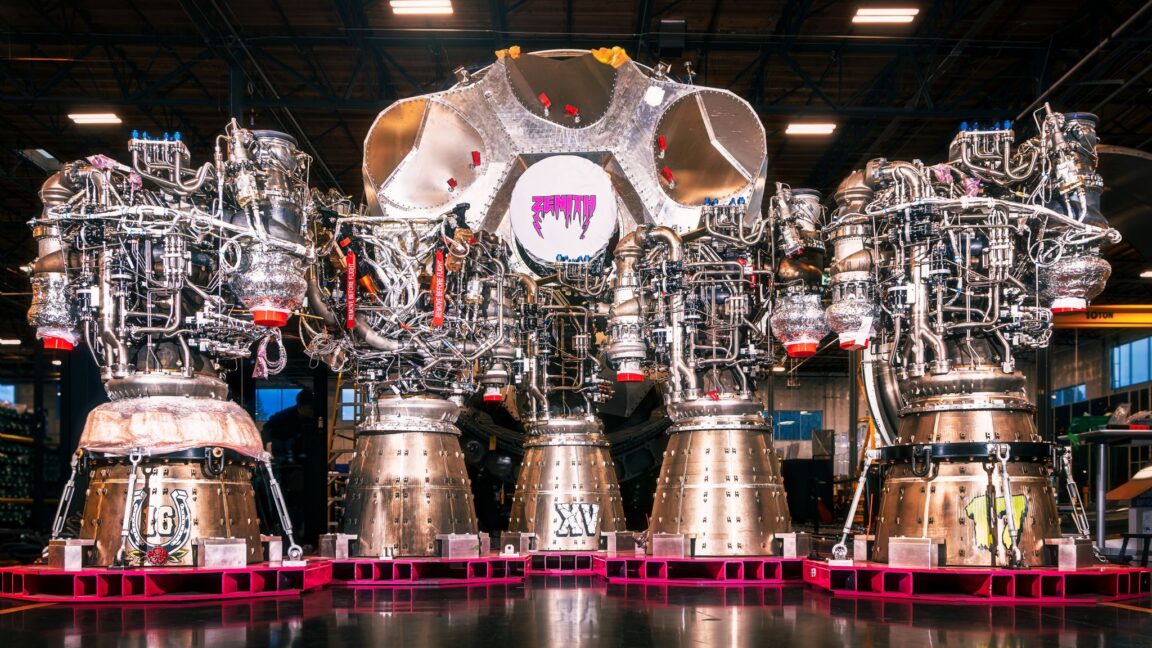
Stoke Space completed development of its Zenith engine, a methane-fueled powerplant for the Nova medium-class rocket. Seven Zenith engines will power Nova's first stage booster, generating about 700,000 pounds of thrust. Flight engines are shipping to Cape Canaveral for integration. Stage 2 is undergoing cryogenic proof testing and hot-fire tests at Stoke's Washington facility. Nova's second stage features 24 thrusters surrounding a regeneratively cooled heat shield for reentry protection. First launch is expected next year.
China's LandSpace completed ground acceptance and testing of nine methane-fueled engines recovered from its Zhuque-3 rocket's first stage after an August orbital flight. Engines were disassembled, inspected, refurbished, reassembled, and retested. LandSpace did not say whether any engines will fly again.
A Soyuz-2.1b rocket launched from Russia's Vostochny Cosmodrome on November 14, carrying two high-resolution imaging satellites and 12 secondary payloads. The flight included CubeSat-class satellites for NPO Kaisant, a Russian arms manufacturer specializing in drone communications. NPO Kaisant stated the satellites will provide secure communications to Russian drones over Ukraine.