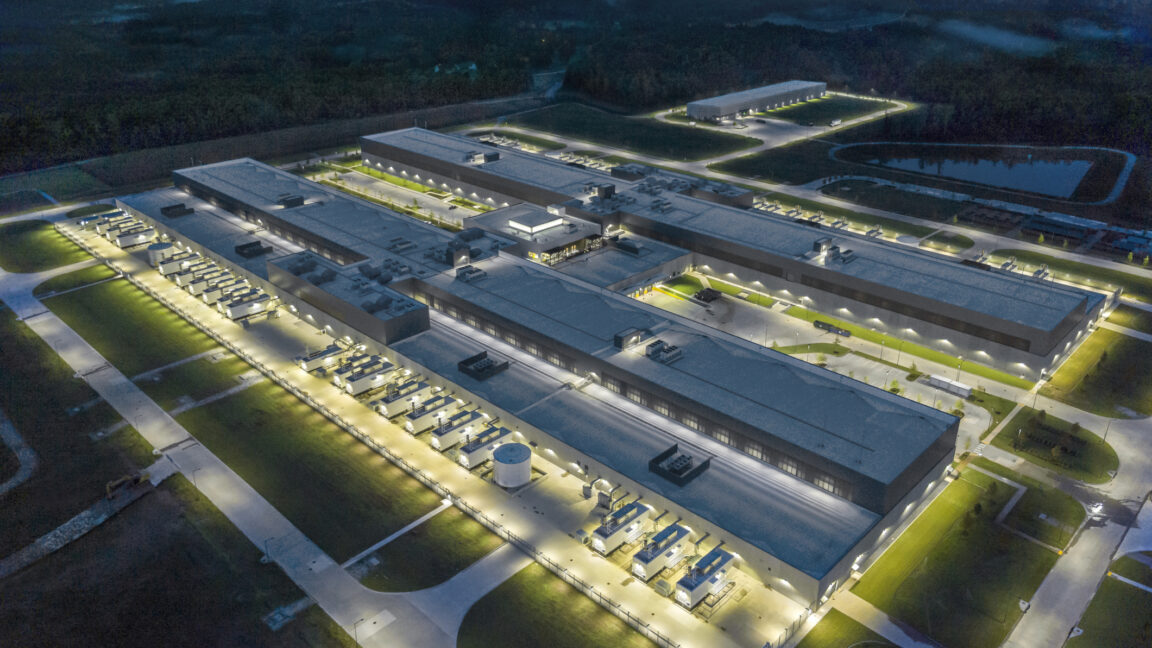
A new study tracking hyperscale data centers operating in the United States between May 2024 and April 2025 found they consumed 68 to 99 terawatt-hours of electricity annually. That equals 1.5 to 2.2 percent of total US electricity use, comparable to the consumption of Wisconsin or Indiana.
Researchers began with 675 facilities from a commercial database compiled using news reports, company statements, and satellite imagery. After removing facilities without reported electrical capacity or those that couldn't be verified as suitably large buildings with appropriate cooling and electrical equipment, the list narrowed to 403 data centers with an average electrical capacity of about 40 megawatts.
The study acknowledged limitations. It could not differentiate between AI compute and traditional data services. Researchers used a power utilization range to estimate actual consumption, applying 48 percent capacity usage for conventional data centers and 70 percent for AI training loads.
The 403 hyperscale data centers accounted for an estimated 21 to 31 million metric tons of CO2 annually. That represents approximately 0.5 percent of total US fossil fuel CO2 emissions. Their electricity mix was only slightly cleaner than the US average, with 54 percent from fossil fuels, 25 percent from renewables, and 21 percent from nuclear.
A Lawrence Berkeley National Laboratory report found total US data center electricity use reached 192 terawatt-hours in 2024. The hyperscale facilities in this study account for something like one-third to one-half of all data center energy use.
The study did not include on-site power generation. Cleanview, a market intelligence company, has tracked 116 current or planned data centers with on-site generation as of early 2025. On-site generators emit 60 to 80 percent more greenhouse gases than utility power plants producing the same amount of electricity.