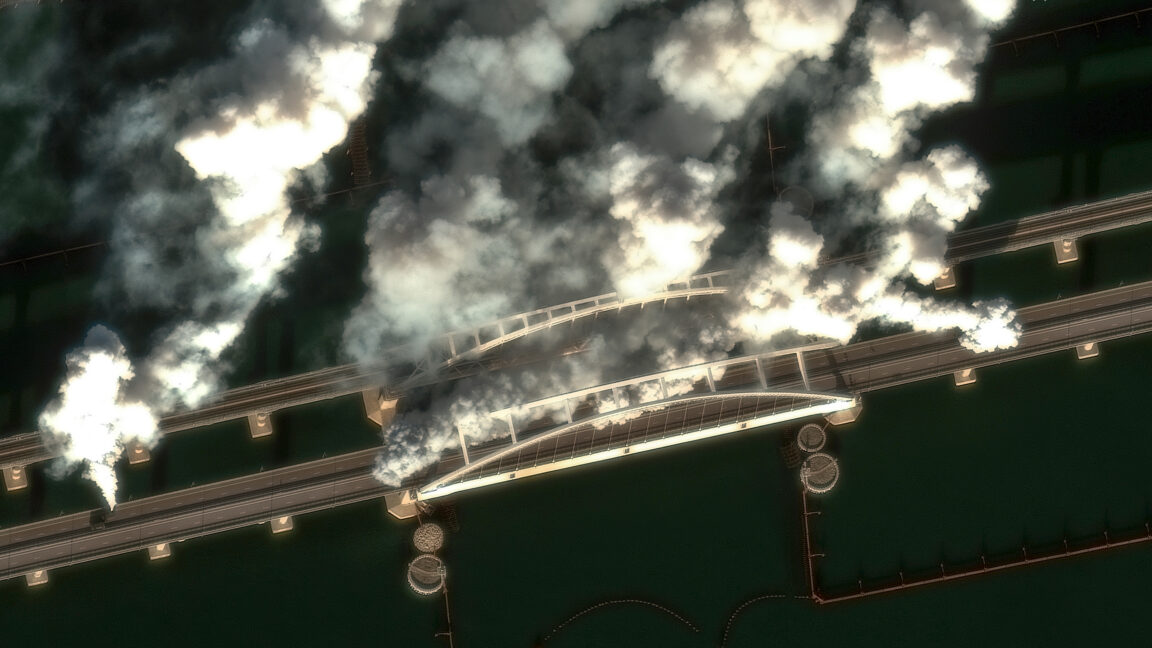
Ukraine destroyed a segment of the Kerch Strait Bridge on November 15 and 16 using a coordinated attack of drones and missiles, including its homegrown Flamingo cruise missile, according to the Institute for the Study of War. The strike collapsed one of two steel arches supporting the bridge's roadway.
Ukraine conducted the operation without relying on Starshield, the military version of Elon Musk's Starlink satellite network. The Financial Times reported that Ukrainian units deliberately avoided Starshield because of recent US restrictions that prevent Ukraine from using it on drones or anything traveling faster than 100 miles per hour.
Instead, Ukraine adapted a Russian battlefield technique. Ukrainian drones equipped with mesh radios created an airborne communications network where each drone acted as a relay node. This allowed operators located more than 250 kilometers away to remotely guide missiles and strike drones while evading Russian air defenses and targeting the bridge's weakest structural points.
Ukrainian President Volodymyr Zelenskyy said the latest US-imposed Starshield restrictions have not been lifted. He described the speed limit as interfering with Ukrainian drone interceptor technologies designed to defend against Russian drone attacks on Ukrainian cities and infrastructure. SpaceX denied that restrictions had returned.
Weeks of preparatory strikes systematically destroyed or degraded Russian air defense weapons, radars, and electronic warfare equipment protecting the bridge. The November 15 attack coincided with the largest Ukrainian overnight drone attack on Russia since the full-scale war began, Reuters reported.
The bridge's railway section was only moderately damaged, with trains appearing to run again after the strikes, according to video sources cited by the Kyiv Independent. But the severe damage to the roadway cuts off a crucial transportation link between Russia and occupied Crimea. The Institute for the Study of War assessed that the destruction will complicate Russia's ability to maintain its occupation and military presence in the peninsula. Fallen debris may also prevent large ship traffic through the Kerch Strait, making it harder for Russia to resupply Crimea by sea.
Engineering experts told the New York Times that repairs to the bridge's roadway could take two years under normal circumstances, though damage to the piers could extend that timeline. Russian repair efforts would likely face risk from future Ukrainian attacks.