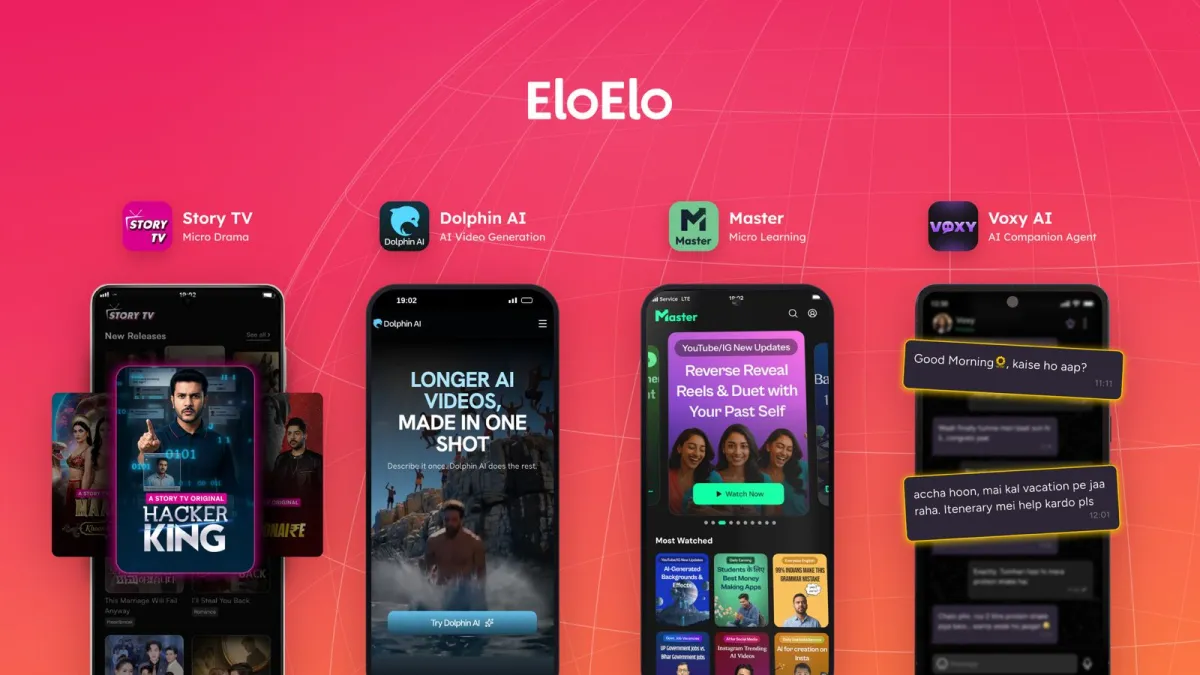
NBCUniversal's decision to invest $80 million in EloElo through its Series C round—bringing the company's valuation to $500 million and total fundraising to $130 million—signals growing confidence in India's microdrama opportunity. With more than 118 million monthly users consuming serialized content and Story TV commanding 33 million active users, the scale is undeniable. Yet this impressive capital vote also masks a fundamental problem that no amount of funding can easily solve: monetization remains stubbornly broken in India's streaming market.
The numbers tell a sobering story. According to Redseer, while more than 40 million people have paid for microdrama at least once, only 15-17 million actually maintain monthly subscriptions. Even more damning, an Ormax Media survey found that 72% of users have never paid for microdrama content at all. This chasm between free users and paying subscribers isn't a temporary friction—it's the market's structural reality. EloElo's diversified subscription model (monthly, quarterly, and yearly plans) and ad-supported free tier may generate revenue, but neither approach appears to be cracking the conversion problem that plagues the entire category.
Saurabh Pandey, the company's founder and former Flipkart executive, has articulated a compelling vision for why serialized mobile content matters—users spend 95 minutes daily on Story TV through multiple sessions, and the next billion internet users will consume entertainment primarily on phones rather than television. But compelling product-market fit and compelling unit economics are not the same thing. The company's pivot toward using its Dolphin AI platform for marketing campaigns and ads suggests that monetizing creators and advertisers may matter more than converting individual users to paid subscriptions.
This is where NBCUniversal's involvement becomes instructive. The media giant isn't simply funding a scaling play—it's positioning itself in a market where Hollywood talent like Issa Rae, James Franco, and Kim Kardashian have already invested in serialized content formats. As analysts project the Indian microdrama industry will cross $3-$4 billion in annual revenue by 2030, there's clearly a significant opportunity. Yet EloElo will need to move beyond relying on free users and premium content partnerships with Balaji Telefilms.
With 240 current employees and plans to expand its AI and machine learning team, EloElo is betting that smarter technology will unlock better content economics. But technology alone won't solve what is fundamentally a consumer behavior problem in price-sensitive markets. The company should view this capital infusion as an opportunity to experiment aggressively with creator-focused monetization models and enterprise partnerships—not just double down on the same subscription and ad-supported approaches that have failed to convert 72% of its user base into payers.