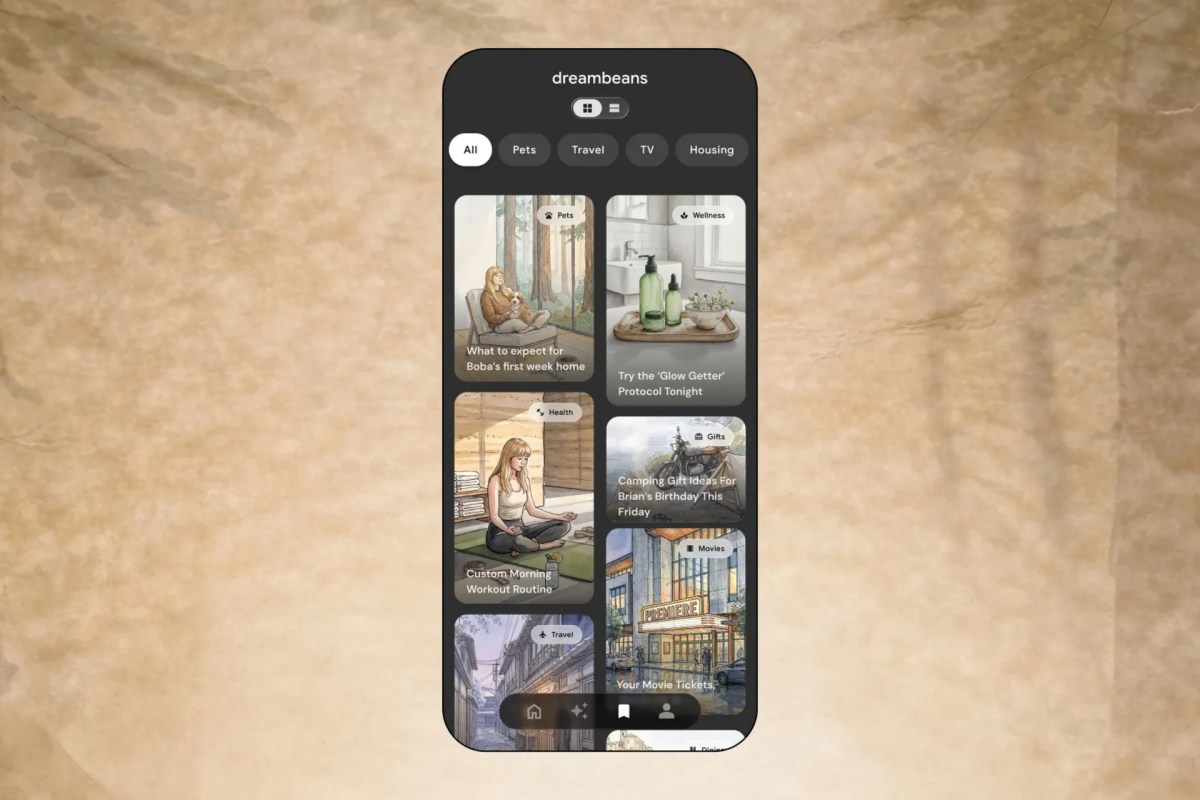
Google's decision to launch Dreambeans in India as its first international market reveals ambitions that outpace the product's readiness. Introduced in June and available on Android and iOS with support for 13 local languages including Hindi, Punjabi, Tamil, Telugu, and Bengali, the app generates personalized visual stories drawn from users' digital activity across Calendar, Gemini, Gmail, Photos, Search, and YouTube. The company selected India specifically because of strong user interest and the widespread use of its services there, with product manager Gozde Oznur highlighting the high overlap of users across Gemini, Gmail, and Google Photos. On the surface, this expansion looks strategic. But the numbers and design limitations tell a different story.
The U.S. performance metrics should give Google pause before expecting different results abroad. Dreambeans recorded nearly 55,000 downloads since its June debut, with about 63% arriving in September when Google opened the app to all eligible U.S. users aged 18 and older. Yet downloads plummeted 84% month over month to approximately 5,500 in October. In its first 30 days after universal U.S. launch, the app recorded an estimated 29,000 downloads—far below comparable AI apps like Meta's Muse at 7.4 million, ChatGPT at 2.8 million, and Grok Bot at 362,000. While Dreambeans' narrow focus on personalized stories rather than general-purpose queries explains some disparity, the trajectory suggests fundamental engagement challenges.
More problematic is Dreambeans' fundamental misalignment with how Indians actually use language. The app supports 13 local languages but forces users to select only one at a time for generated stories. This ignores the linguistic reality Oznur herself acknowledged during the press briefing: many Indians regularly mix languages, particularly Hindi and English in what is commonly known as Hinglish. By design, Dreambeans cannot generate stories mixing languages, severely limiting its appeal in a market where code-switching is the norm rather than an exception. Google built a product for monolingual users and is now hoping it works in a multilingual market.
Privacy concerns compound these limitations. Dreambeans depends entirely on information from users' Google accounts, drawing on Personal Intelligence technology that accesses Calendar, Gmail, Photos, and YouTube data. While Oznur noted users can select which services to connect and delete data anytime, the fundamental risk remains: to use this app, Indians must feel comfortable granting an AI system access to sensitive personal information. The app can generate stories about deceased individuals, though Oznur compared deletion controls to Google Photos features. These privacy-by-consent models require user sophistication and trust that may not exist at scale, particularly in markets with less established data privacy norms.
Google should reconsider whether expanding a struggling product internationally addresses the core problem: most people don't want proactive AI stories about their lives, regardless of language or market. Before scaling Dreambeans further, Google needs to understand why October downloads dropped so dramatically after the September peak. The India launch feels like geographic expansion masking domestic product-market fit challenges rather than solving them. Sometimes the right move isn't going bigger, but going back to the drawing board.