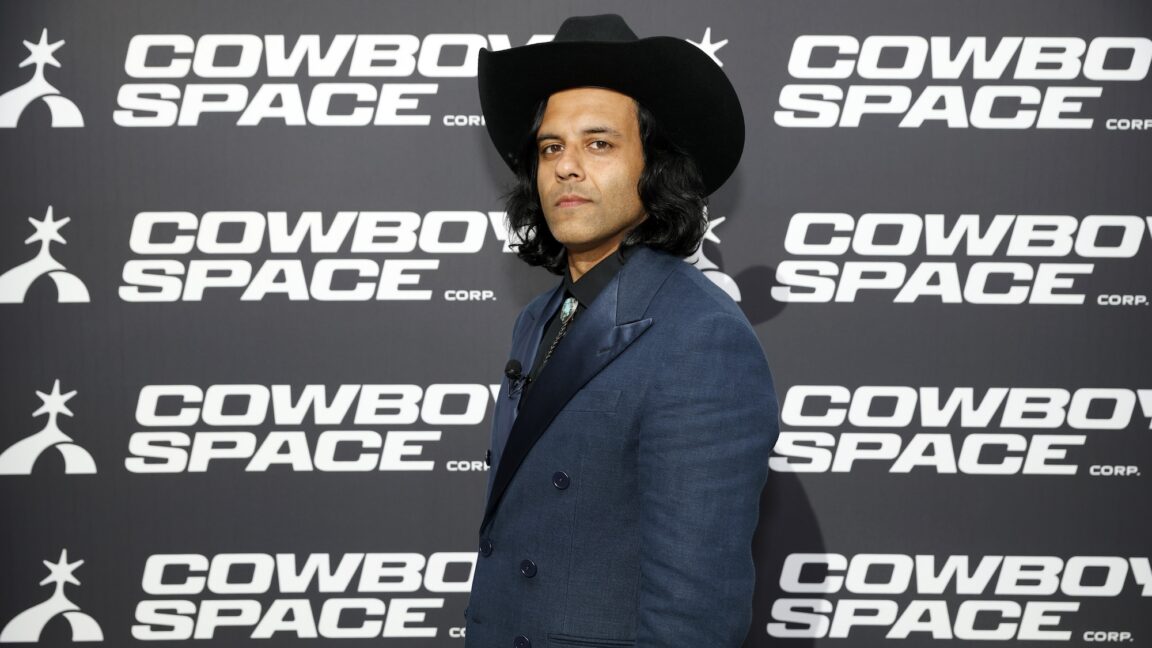
Cowboy Space, the startup founded by Robinhood co-founder Baiju Bhatt, unveiled specifications Monday for its Big Iron rocket, a medium-lift launcher planned for liftoff before the end of 2028. The rocket will stand 282 feet tall with a 15-foot diameter and carry up to 18 metric tons to low-Earth orbit. Nine methane-fueled Clydesdale engines will power the first stage, with one engine on the second stage.
Bhatt started the company, originally named Aetherflux, in 2024 and rebranded it as Cowboy Space earlier this year. The upper stage of Big Iron will double as the core of Cowboy Space's data center spacecraft, equipped with five racks of GPUs, six inter-satellite laser links, and solar arrays. The company is targeting the space-based AI market led by SpaceX.
The announcement comes as the launch industry faces capacity constraints. At the Silicon Valley Space Week conference this week, executives warned the US government may have moved too quickly to assume the commercial launch market could support growing military needs. Stoke Space's vice president of business development, Devin Papandrew, said it "may have been a strategic error" for the government to assume the launch problem had been solved. The head of government relations at United Launch Alliance estimated relief from the supply crunch would arrive "2030-ish."
Separately, the Pentagon's Office of Strategic Capital announced a conditional $150 million loan commitment to Stoke Space for construction of a second launch pad at Cape Canaveral. The loan follows Stoke's $1 billion Series E round in September.
At the European Space Agency, Themis, the reusable rocket demonstrator being developed by ArianeGroup, faces delays. Director of Space Transportation Géraldine Naja expressed uncertainty October 22 whether the single-stage rocket hopper would complete its first flight before year-end. Harsh Scandinavian winter at Esrange Space Center in Sweden may prevent flight. The rocket, originally expected to hop in 2022, was rescheduled to the first quarter of 2026 according to ESA Director General Josef Aschbacher in January.