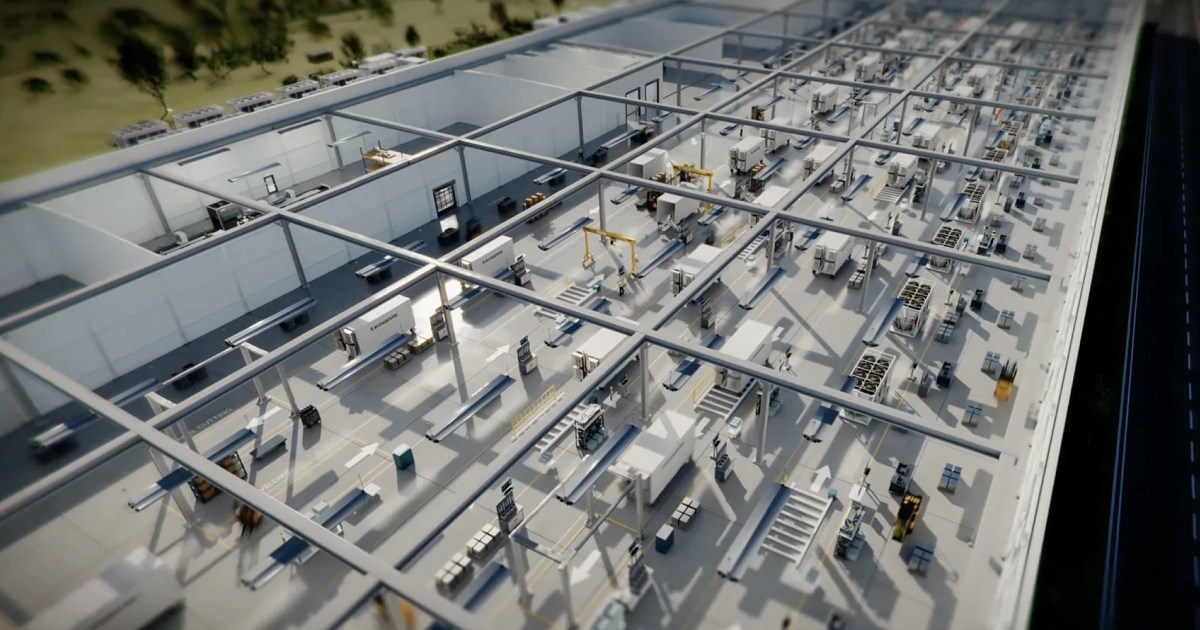
Runware plans to build a factory in Romania that manufactures modular AI data center pods on an assembly line, aiming to produce 30 megawatts of capacity per day by 2028, roughly equivalent to 1 gigawatt per month. The company told TechCrunch it wants to mass-produce these pods like cars, contrasting with competitors like Crusoe and Schneider Electric that also sell prefabricated data centers.
Flaviu Radulescu, co-founder and CEO, said Runware already operates two factories. One has built pods for several years, and a second launched earlier this year and is expected to finish within months and go online early next year. The company claims pods currently take three weeks to build but will soon take one day as production ramps up. Installation and setup will take an additional 48 hours.
Customers can provide their own site to assemble the pods or have Runware find one. Pricing options include renting compute from Runware, supplying their own GPUs and paying a monthly fee for the pods and operations, with power and internet charged separately. The pods use closed-loop liquid cooling with air-cooled radiators and require only power and internet connections.
Runware has raised over $60 million to date and plans a Series B. The company is financing the factory launch with its $50 million Series A from last December. Radulescu said Runware has received $1 billion in committed interest for its Sonic pods since opening them to outside customers a month ago, representing over 20 megawatts currently being delivered.
The company works with power providers on a site pipeline covering 397 megawatts, with potential to expand to 1.2 gigawatts. Radulescu said the pods run "completely silent up to temperatures of 86 degrees Fahrenheit" and the company aims to use renewable energy sources when possible. Runware will expand to the U.S. and other regions after bringing its Romania factory online early next year.
Radulescu acknowledged supply chain challenges. While Runware designs its own cooling and pod systems using standard components, some parts come from Germany and the company depends on Nvidia for networking. He also hired a plant manager from the automotive industry to help execution, citing Runware's "very different" cost structure compared to failed manufacturing efforts like electric vehicle startup Arrival.