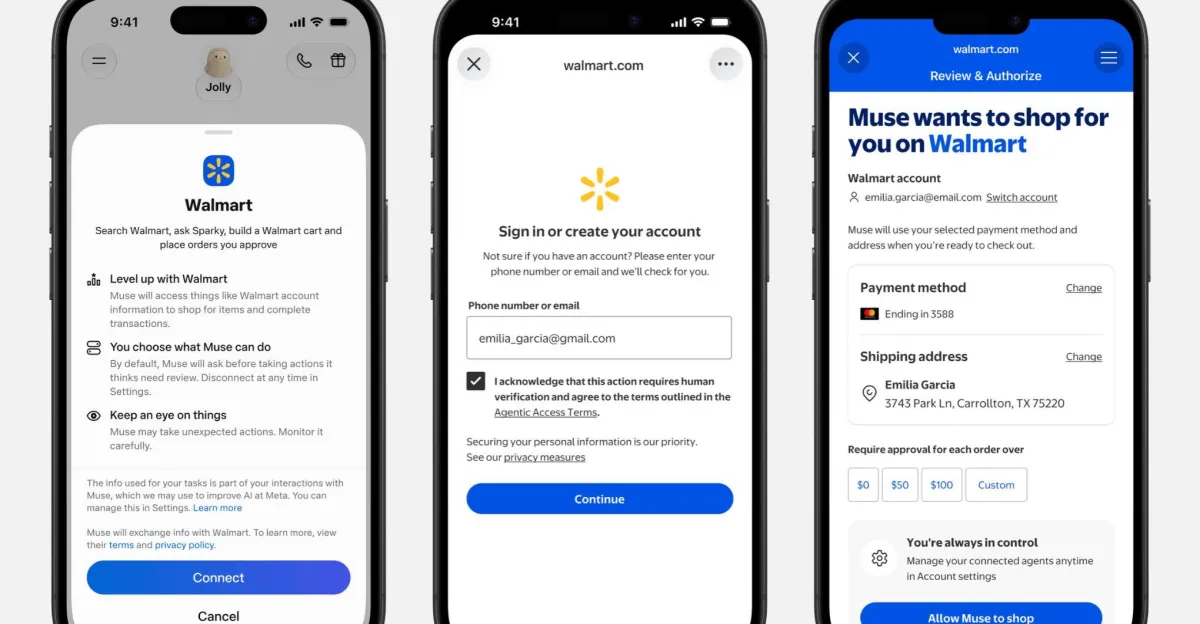
While Amazon and eBay have slammed the door on AI agents, Walmart has thrown it wide open. The retail giant's decision to roll out the Agent Gateway it announced last month with Meta's Muse support—live and ready for Black Friday shopping—represents a pivotal strategic move that other retailers should study carefully. This isn't just about letting an AI agent browse and buy; it's about Walmart recognizing that the future of commerce belongs to platforms willing to integrate with AI ecosystems rather than resist them.
The mechanics here matter. Muse can now find and purchase Black Friday deals on Walmart's behalf through dedicated Agent Profiles within customer accounts. Walmart has built in guardrails: spending limits, purchase approval requirements, and transparent purchase history tracking. These features address the legitimate concerns that make Amazon and eBay's blanket bans seem less like principle and more like defensiveness. The fact that Walmart allows customers to set shopping rules, approve purchases, and maintain control suggests that collaboration with AI doesn't require abandoning consumer protection.
What makes this move especially shrewd is Walmart's explicit commitment to scale. The company states that Muse support is "just the beginning," with "additional Walmart shopping experiences for other AI agents and apps" coming soon. This isn't a one-off partnership with Meta—it's a declaration that Walmart intends to become the retail platform of choice for the entire AI agent ecosystem. That's a competitive advantage that compounds. As more agents gain Walmart access, more consumers will default to shopping there via AI assistants.
The contrast with Amazon and eBay's approach is instructive. Those platforms' blocking of AI agents might protect short-term margins by preventing automated shopping, but it cedes the future to competitors willing to adapt. Walmart's move suggests a different calculus: embrace the technology, build proper safeguards, and own the emerging channel rather than surrender it.
For venture investors and founders building in AI commerce, Walmart's signal is unmistakable. The company is signaling it will be a partner to the agent economy, not an opponent. That changes where startups should be building, which platforms deserve integration priority, and what the competitive landscape will look like when AI shopping moves from novelty to default. Retailers watching this play out need to decide quickly: lead or follow.