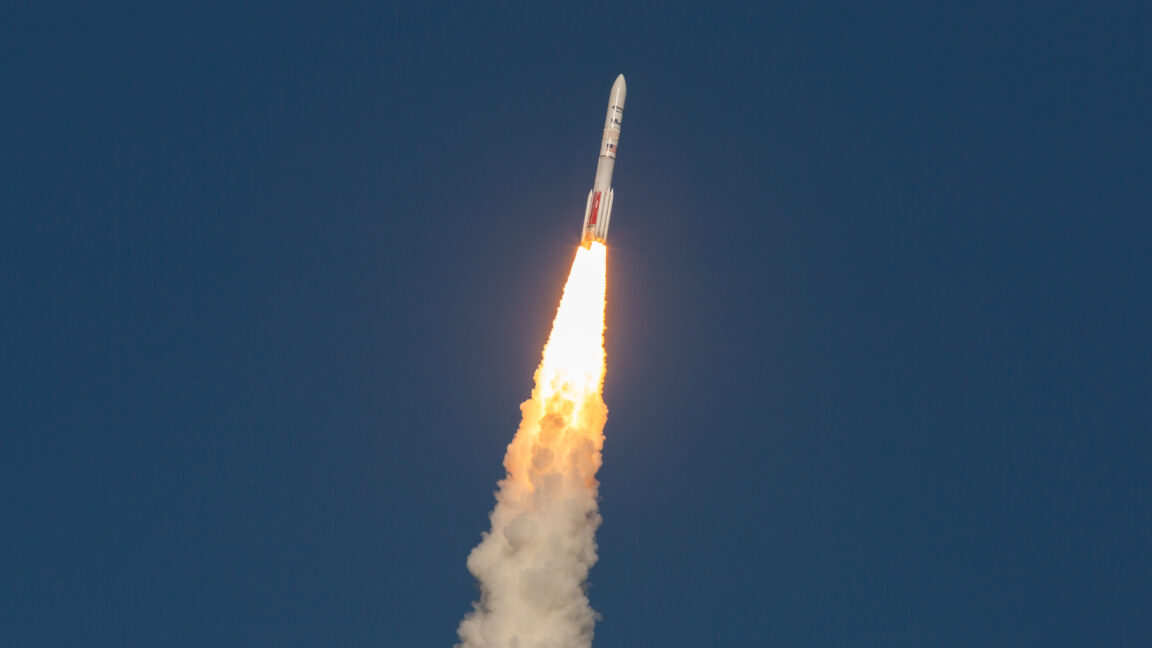
United Launch Alliance confirmed that its Vulcan rocket failed during its return-to-flight mission Tuesday, with the vehicle experiencing "low booster performance" that caused stage separation at low altitude and below orbital velocity about 10 minutes into flight.
ULA stated that the Centaur V upper stage and solid rocket boosters performed nominally. The core stage uses two BE-4 engines supplied by Blue Origin. New Glenn, Blue Origin's rocket which uses a more powerful version of the same engine, experienced a catastrophic failure in May that was later attributed to a main oxygen valve.
According to two independent sources cited by Ars Technica, preliminary data suggests the problem originated on the launch vehicle side rather than in the engines themselves. The issue may relate to systems feeding methane and liquid oxygen propellant to the engines.
ULA engineers are examining the possibility that one of the two BE-4 engines produced lower thrust shortly after liftoff and never ramped back to full throttle. Video from high-zoom tracking cameras appeared to show one engine slightly dimmer than the other after the solid rocket boosters jettisoned nearly two minutes into flight. An asymmetric shutdown of the BE-4 engines could have contributed to sudden attitude motion near stage separation.
Information about the failure is being closely held by ULA and Blue Origin. The Federal Aviation Administration is overseeing the investigation led by ULA. According to sources, the investigation is "incredibly complicated" and remains in early stages. No definitive conclusions have been drawn.
This was Vulcan's fifth flight since its January 2024 debut. Two previous flights experienced nozzle issues with solid rocket boosters but reached orbit. The latest failure is likely to sideline Vulcan for at least six months or longer, impacting US Space Force national security payloads and Amazon's planned Amazon Leo constellation launches.
Blue Origin expects to complete the New Glenn anomaly investigation later this month and said modified BE-4 main oxygen valves have been incorporated into engines for upcoming flights.