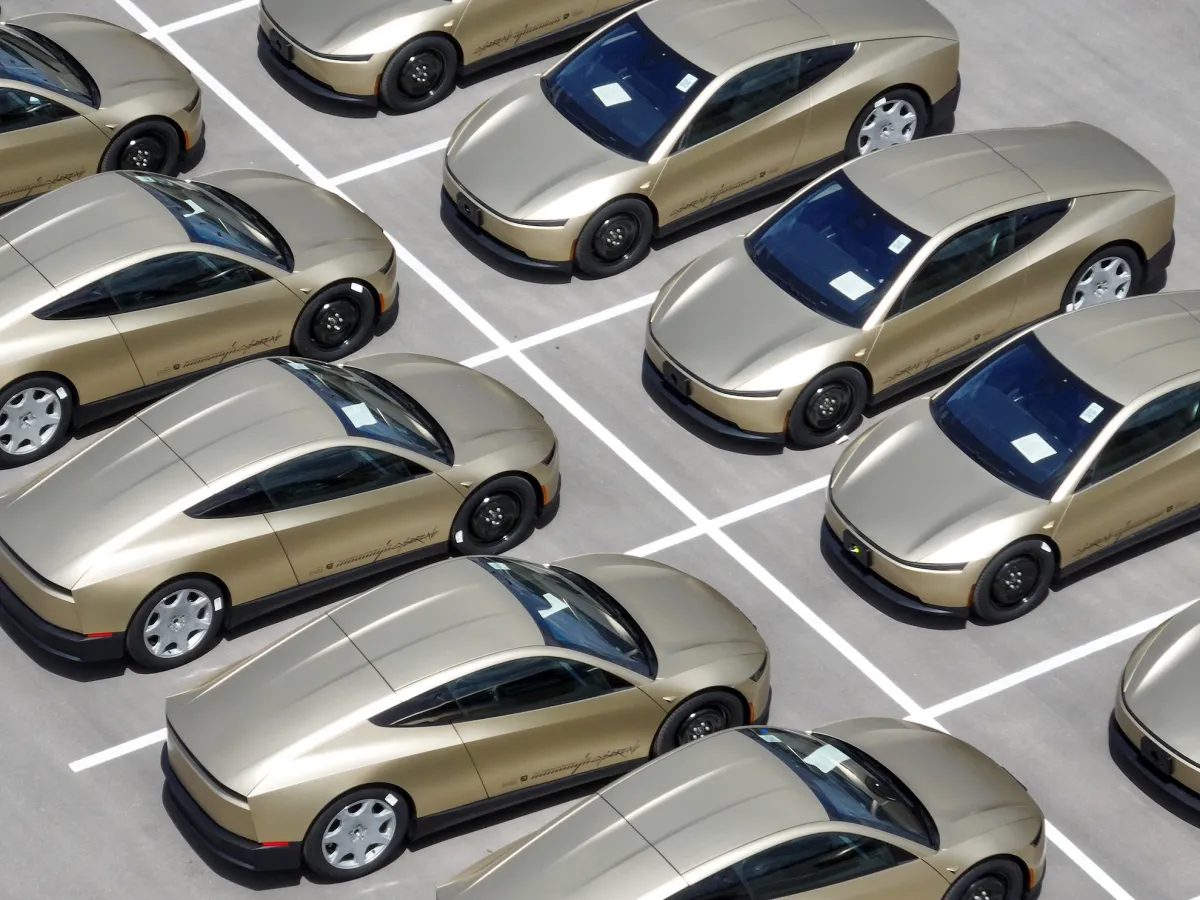
Tesla announced a €3 billion ($3.3 billion) investment to expand its Berlin gigafactory, with production of Cybercabs set to begin in 2029. The facility in Grünheide will be capable of producing up to 1 million vehicles per year, André Thierig, Tesla's senior director of manufacturing for the site, stated on LinkedIn. Construction is expected to begin in the first half of 2027. Thierig said the expansion will make the facility the most technologically advanced of all Tesla factories.
The move reflects Tesla's pivot toward autonomous vehicles and away from traditional EVs. The company plans to cease Cybertruck production next year to make room for Cybercab manufacturing at its Austin factory. Tesla delivered more than 486,000 vehicles in the third quarter, with sales in Europe rising as EV adoption continues.
The Cybercab, a steering wheel-free two-seat vehicle first revealed in 2024 and launched publicly in September, lacks a steering wheel, pedals, and other traditional motor vehicle equipment required under federal safety standards. Federal regulators are currently investigating Tesla's self-certification of the vehicle. Tesla relies solely on cameras rather than additional sensors like lidar to power its self-driving system.
Since Cybercabs began operating more than two months ago, they have not had any major incidents, though the vehicles have been restricted from driving late at night. Tesla has about 573 Cybercabs on roads in Austin and soon Dallas, while about 1,307 robotaxis registered in Texas are mostly modified Model Y vehicles operating in several Texas cities.