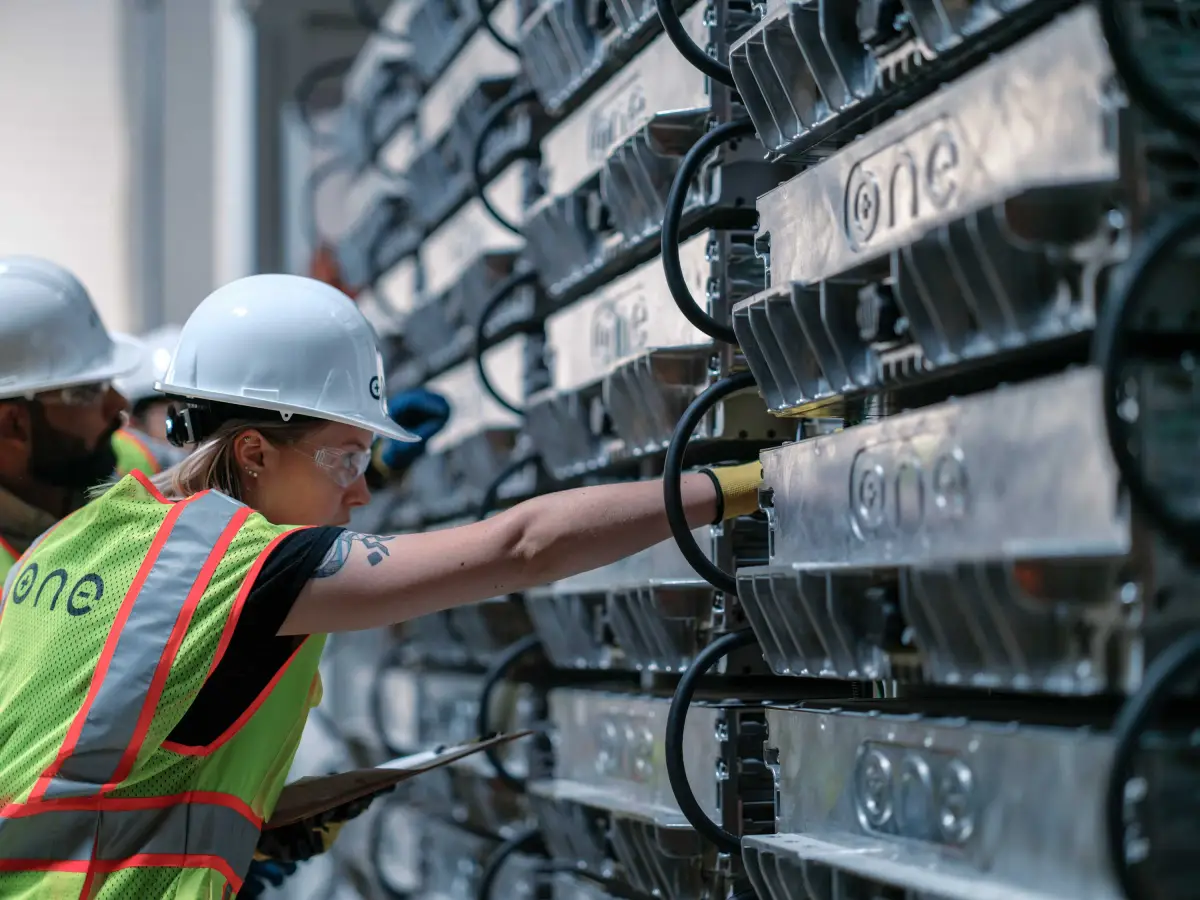
Our Next Energy, a battery startup founded by former Ford and Apple engineer Mujeeb Ijaz, will go public via a SPAC merger with Wen Acquisition Corp. The company is valued at $600 million pre-money, and the merger is expected to bring $400 million in gross proceeds assuming no redemptions. The combined company will trade on Nasdaq under the ticker "ONEE" with a pro forma implied equity value of $1 billion.
ONE has raised $483 million to date and was previously valued at $1.3 billion, according to PitchBook. The company designed a dual-battery system for electric vehicles using lithium-iron-phosphate and manganese-rich chemistries, with an initial prototype achieving over 600 miles on a single charge.
The startup faced significant headwinds when its Series C funding attempt failed in late 2023, as the EV market grew slower than expected and automakers preferred cheaper Chinese batteries. ONE laid off staff and vacated its lease for a planned $1.6 billion Michigan factory. Ijaz was ousted as CEO in December 2023 but returned to the role in March 2025 after his brother's investment firm co-led a new funding round.
Upon his return, Ijaz shifted ONE's focus away from automotive batteries toward grid-scale batteries, defense, and rail applications. The company operates a pack assembly plant in Novi, Michigan with 3 gigawatt-hours per year capacity and is upgrading a smaller cell factory to produce 50 megawatt-hours annually.
ONE expects $30 million in revenue this year and $60 million next year. The company said it has $200 million in binding, multi-year contracts with railroads and defense contractors. Ijaz highlighted a hybrid locomotive using a 2.8 megawatt-hour battery that delivers a 50% improvement in diesel fuel consumption.
The investor pitch focuses on two markets: defense, valued at $16.2 billion including drones, submarines, and defense-focused data centers, and rail, valued at $28.2 billion. These markets are smaller than the EV sector, currently worth about $73 billion and potentially reaching $200 billion by decade's end.
ONE's strategy centers on foreign entity of concern restrictions preventing U.S. government purchases of Chinese batteries, positioning American suppliers at a premium.