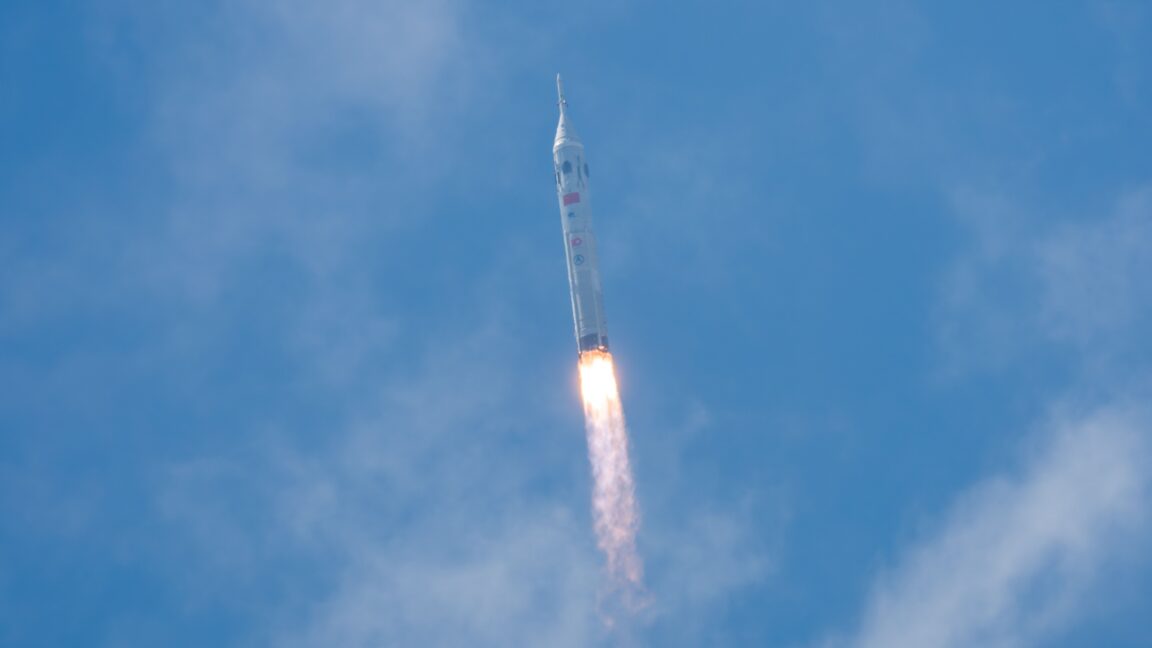
China's space officials publicly disclosed plans this weekend to land astronauts on the Moon before 2030, laying out the country's most detailed timeline yet for crewed lunar missions. At the Seventh Manned Spaceflight Conference in Beijing, Wang Xiang, chief designer for the lunar exploration program, presented the roadmap.
China will use a lunar-orbit rendezvous approach similar to NASA's Apollo program, but will launch the crew and lunar lander separately because it lacks a rocket as powerful as the Saturn V. In August 2025, the China Manned Space Agency tested a high-fidelity mock-up of its 26-ton Lanyue lunar lander near Beijing, using giant tethers to simulate lunar gravity as the vehicle fired its main engines and fine-control thrusters. The Mengzhou spacecraft, designed to carry astronauts to the Moon, recently arrived at the Wenchang Space Launch Site in Hainan for a planned 2027 test atop a Long March 10A rocket.
The plan does not include a crewed flyby mission similar to Apollo 8 or Artemis II. The Mengzhou vehicle will conduct human-crewed test missions to Tiangong, China's space station in low-Earth orbit.
NASA has set a target of landing humans on the Moon by 2028, ahead of China's timeline. NASA Administrator Jared Isaacman has moved to cancel the Lunar Gateway space station and streamline upgrades to the Space Launch System rocket. SpaceX and Blue Origin hold multibillion-dollar contracts to develop lunar landers, though a US landing could be delayed to 2030 or later depending on progress.