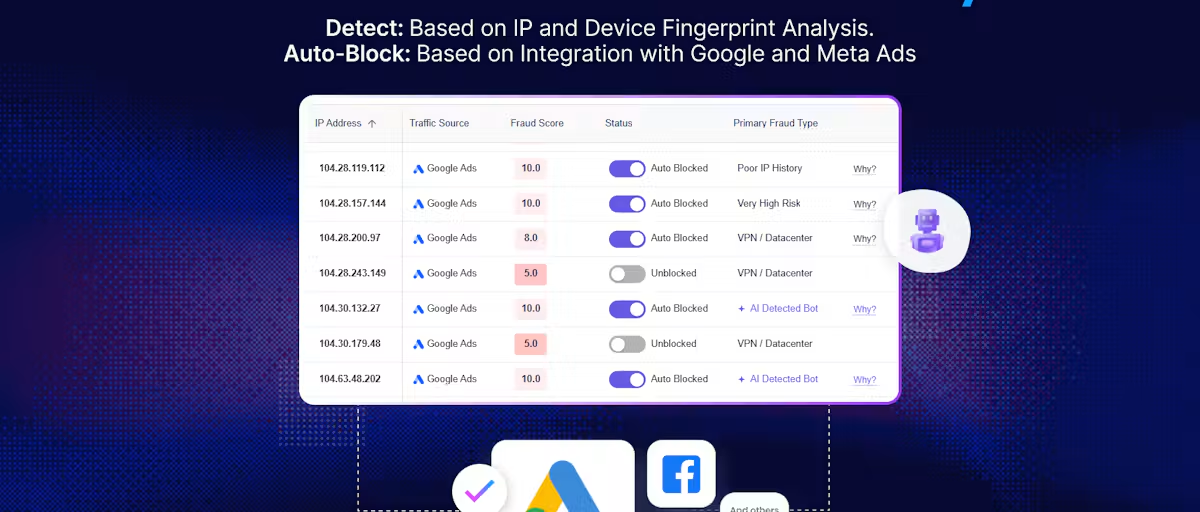
Fraud Blocker launched its new AI Detection engine on Product Hunt today with a deceptively simple premise: when a bot mimicking human behavior gets flagged, tell the advertiser exactly why. Co-founder Brandon and CEO Mike Schrobo are betting that transparency beats accuracy alone—and they may be onto something critical about how the digital advertising industry has evolved.
The problem they're solving is real and accelerating. Click fraud changed this year as bots started clicking like real people, and as Brandon notes, "rules alone can only catch so much." With 4,500 client accounts, 1 billion IPs analyzed annually, and 500 million ad clicks analyzed annually, Fraud Blocker has the scale to see patterns that smaller operators miss. But scale alone doesn't justify a Product Hunt launch. The insight does: advertisers and agencies need to trust the blocks, not just receive them.
This is where Fraud Blocker's design philosophy diverges from the blocking-as-a-black-box approach that dominated fraud prevention. Every AI block comes with plain-language reasoning, exportable for client reports. On Google Ads and Meta Ads, the system blocks automatically. On other channels like Microsoft ads, TikTok, LinkedIn, Reddit, and ChatGPT, it detects and reports. This graduated approach respects platform differences while maintaining a consistent explanation standard. The distinction matters: agencies showing clients what got blocked and why build trust. A block without explanation breeds suspicion, even when it's correct.
The market timing is sharp. Average CPC costs are soaring, largely due to dropping organic search volume as AI tools shift user behavior. As one commenter noted, "Every click matters" when competition drives costs higher. For agencies handling multiple clients, even modest wasted ad spend across accounts compounds quickly into significant losses. Performance marketing teams that previously tolerated fraud as an acceptable cost now scrutinize every dollar. Fraud Blocker's offering—clear visibility into where budget actually went—addresses this pressure directly.
What comes next depends on whether Fraud Blocker can turn its transparency advantage into a moat. The company is asking the right questions: what would an AI's reason need to show before you'd trust the block? The answer will shape product development. But there's a broader implication: the fraud detection market is maturing beyond catch-and-release tactics toward accountability. Advertisers and agencies deserve to know not just that fraud was prevented, but how.
Fraud Blocker's 25% discount through the end of 2026 offers a low-risk entry point. The real test isn't whether the AI catches fakes—it's whether the explanations hold up under scrutiny. That's a fair test to demand, and one worth watching.