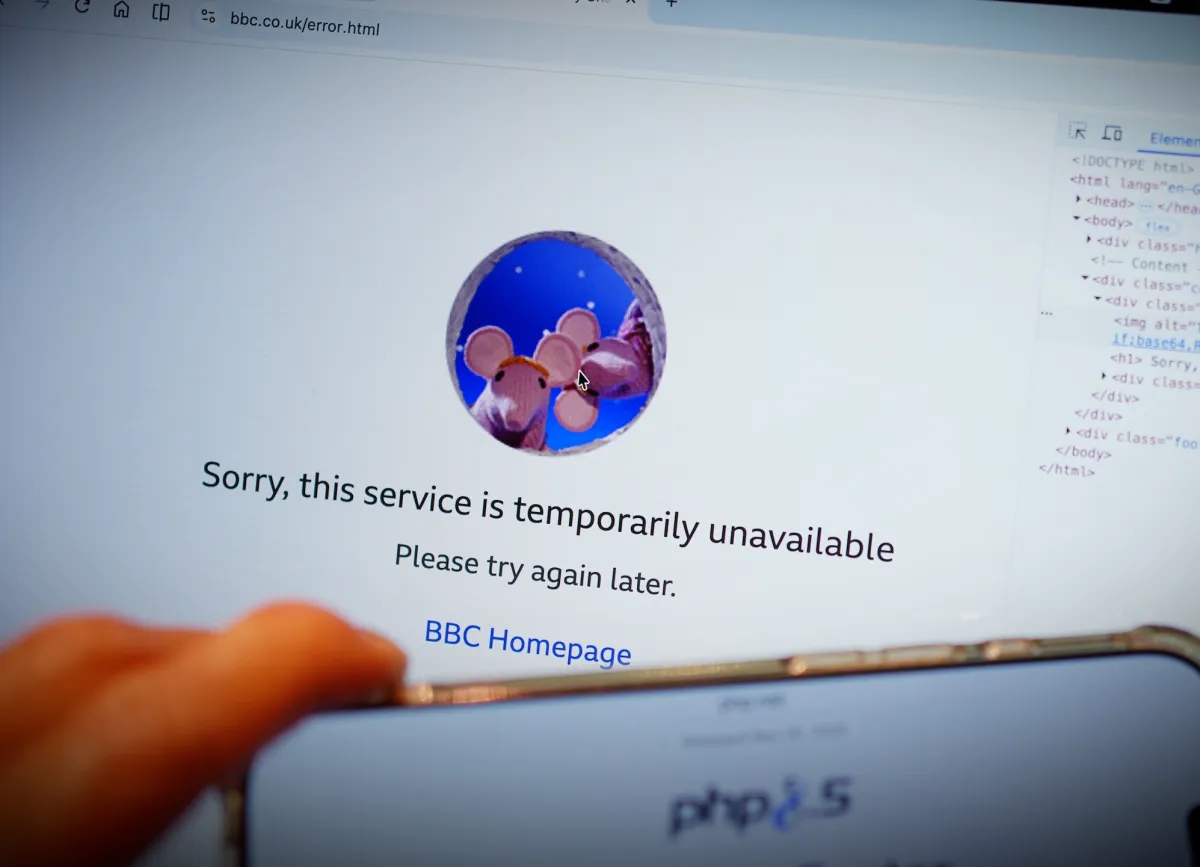
The Cybersecurity and Infrastructure Security Agency (CISA) has confirmed that threat actors are actively exploiting critical vulnerabilities in PHP, the server-side scripting language powering roughly 70 percent of the internet's websites. The warning signals a shift from theoretical risk to real-world attacks targeting one of the web's most foundational technologies.
PHP's ubiquity creates outsized risk. The language runs on WordPress sites, e-commerce platforms, content management systems, and countless custom applications. When vulnerabilities emerge in PHP's core, attackers gain a direct path into millions of targets simultaneously. CISA's alert indicates that exploitation has moved beyond proof-of-concept demonstrations into active threat campaigns against live systems.
The agency did not publicly name the specific vulnerabilities under active exploitation, a common practice when attacks are still spreading and patches remain incomplete across the web. However, CISA's explicit warning that government and critical infrastructure operators should prioritize patching their PHP installations suggests the severity warrants immediate action rather than standard update cycles.
This timing matters. PHP regularly receives security updates, but deployment lags considerably behind availability. Many organizations run outdated versions for months or years, particularly smaller operations lacking dedicated security teams. When CISA publicly names active exploitation, the clock starts ticking. Attackers use government warnings as a roadmap, testing whether unpatched systems remain vulnerable before launching campaigns at scale.
The PHP security landscape has grown more complex over the past decade. The language abandoned the long-term support model for versions 5.6 and 7.0, pushing users toward newer releases like 8.0 and 8.1. Yet many hosting providers and legacy applications cannot easily upgrade due to compatibility constraints. This fragmentation creates multiple surface areas for attackers.
The vulnerability disclosure comes as web application attacks accelerate broadly. Ransomware operators, state-sponsored groups, and financially motivated threat actors all use web vulnerabilities as entry points into networks. PHP bugs provide what attackers call "blast radius" capability. One zero-day or unpatched vulnerability can compromise thousands of websites across different organizations and industries simultaneously.
Organizations running PHP face immediate decisions. IT teams must audit their PHP versions, identify which installations face internet exposure, and prioritize patching. Web hosting providers must force updates or isolate unpatched instances. WordPress-dependent businesses, which represent a massive portion of PHP's footprint, should verify that their hosting provider has already applied patches to their PHP runtime environments.
The exploit represents a return to first-principles web security. PHP itself isn't the problem. The ecosystem problem is deployment speed. Between patch release and universal deployment, a window of vulnerability persists. That window is shrinking in most organizations, but millions of websites still run on unpatched or outdated versions, making them targets the moment a vulnerability becomes public knowledge.
CISA's warning signals that window is closing fast for these particular PHP flaws. Organizations that delay patching now will face substantially higher risk of compromise in the coming weeks.