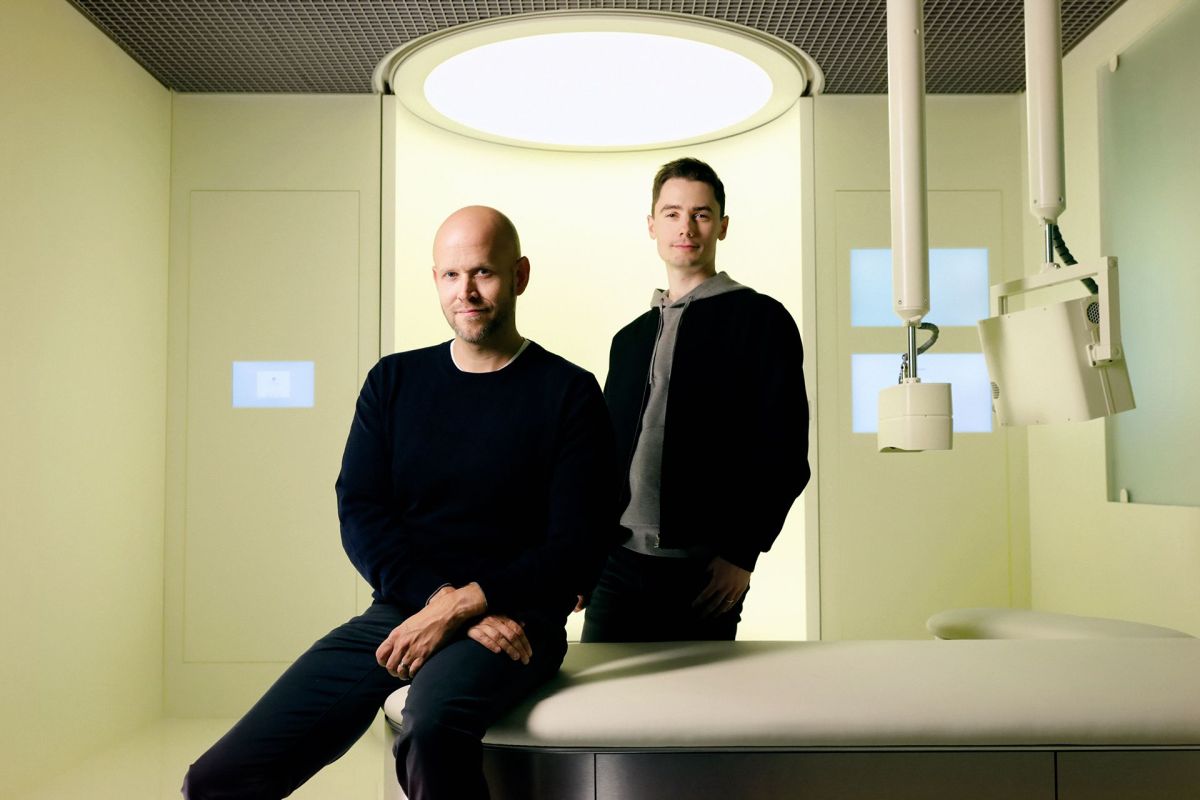
Daniel Ek's Neko Health just raised $700 million to expand its preventative body-scanning business into America, signaling serious investor conviction behind the full-body MRI as a wellness tool for the wealthy and health-conscious. The Spotify founder's venture enters a crowded field where AI-powered health screening startups are racing to redefine preventative medicine outside traditional medical contexts.
Neko Health operates advanced body-scanning centers across Europe, using high-field MRI technology to screen for early signs of disease in asymptomatic patients. The company positions itself as a premium wellness offering rather than a medical diagnostic tool, targeting affluent individuals willing to pay out-of-pocket for comprehensive health imaging. The $700 million raise signals that European venture capital and strategic investors see a real market for preventative screening at scale.
But Neko Health isn't alone in this space. Midjourney, the AI image-generation company, has begun building its own body scanner product, diversifying away from its core business into healthcare. Function Health, another preventative health platform, has also attracted significant capital by bundling biomarker testing, imaging, and AI analysis into a subscription model. These companies compete not just on technology but on trust, convenience, and the promise that early detection prevents costly disease.
The category reflects a broader shift in how wealth and healthcare intersect. Patients with resources increasingly view their bodies as systems requiring proactive monitoring rather than reactive treatment. They want data before symptoms emerge. Investors are betting that this demand scales beyond the super-wealthy, potentially creating a multi-billion-dollar market for preventative imaging and screening.
Several forces drive investor enthusiasm. First, healthcare spending globally remains skewed toward treatment rather than prevention. Neko Health and competitors position themselves as disrupting that model. Second, MRI and AI technology costs are falling, making higher-volume business models feasible. Third, wealthy consumers in developed markets will spend on health optimization outside insurance systems. Spotify's Ek brings brand recognition and operational credibility that legitimizes the category.
The American expansion matters. Europe proved the model works among affluent Scandinavian and UK patients. The US market is vastly larger, with a population more accustomed to direct-to-consumer health services and out-of-pocket wellness spending. Neko Health's $700 million likely funds multiple scanning centers in major US metros, marketing to executives, entrepreneurs, and older high-net-worth individuals.
Regulatory questions remain unresolved. The FDA has not explicitly approved consumer body scanning as a wellness tool outside clinical contexts. These companies navigate a gray zone where they position screening as lifestyle rather than medical diagnosis. If the FDA or insurers begin intervening, the economics change rapidly. Conversely, if preventative scanning becomes insurable or gains clinical validation, the market could expand dramatically.
Competition will intensify. Function Health combines different data streams into preventative profiles. Midjourney brings AI engineering and distribution advantages. Traditional healthcare providers like Mayo Clinic and Cleveland Clinic operate their own preventative programs. The winner likely consolidates the patient relationship through superior insights, convenience, and trust.
Neko Health's American entry tests whether European enthusiasm translates to US adoption and whether the category sustains valuations at scale.