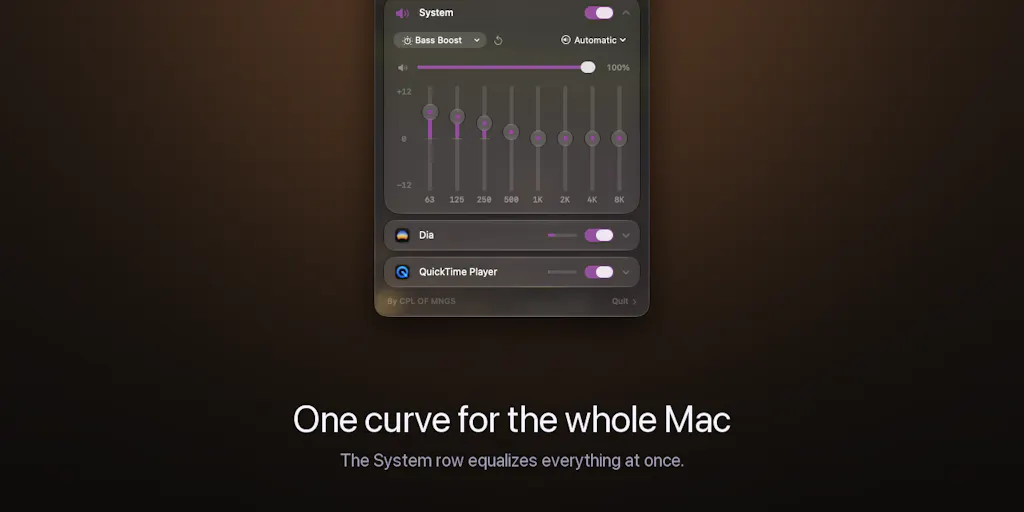
Sound, a new macOS utility, lets users assign independent equalizer settings, volume controls, and speaker outputs to individual applications. The tool addresses a longstanding frustration for Mac users who lack granular audio control across multiple apps running simultaneously.
The core problem Sound solves is straightforward. macOS provides system-wide volume and audio output controls, but no native way to manage audio on a per-application basis. A user listening to music in Spotify while taking a video call in Zoom or Slack cannot independently adjust either app's volume without muting one entirely or switching system audio outputs. Content creators, gamers, and remote workers face constant friction managing competing audio sources.
Sound creates virtual audio channels for each application. Users can set custom EQ profiles, volume levels, and output destinations for Chrome, Discord, Slack, Logic Pro, or any other Mac app. A podcast player can route to headphones while a Slack notification goes to speakers. Music production software can receive a custom EQ curve while system sounds remain untouched. This layer of control has existed on Windows for years through tools like VB-Audio Virtual Audio Cable, making Sound's arrival on Mac a notable gap-filler.
The product launched on Product Hunt, indicating a bootstrapped or early-stage approach without announced venture funding. This distribution channel suggests the founders are targeting power users, creators, and technical audiences first rather than pursuing traditional VC-backed go-to-market. Product Hunt placement typically generates initial user acquisition for developer tools and Mac utilities at lower cost than paid acquisition.
Sound competes indirectly with other audio routing solutions on macOS. Loopback by Rogue Amoeba offers similar functionality but targets professional audio engineers and costs significantly more, positioning Sound as an accessible alternative for mainstream users. SteadyTune provides volume control per app but lacks EQ and advanced routing. This positions Sound in a sweet spot: more powerful than basic volume controls, more affordable than professional-grade audio routing software.
The macOS audio landscape has historically lagged behind Windows in user-level customization, partly because Apple maintains strict audio stack control. Third-party solutions like Sound work within Apple's constraints but require some technical setup. The fact that Sound exists suggests developers found a viable workaround, likely using virtual audio drivers or inter-process audio routing.
For remote workers managing multiple video conferencing apps, Sound offers clear value. For content creators who need to monitor different audio sources separately while producing, the tool eliminates workflow friction. For casual users tired of Spotify drowning out Discord notifications, it provides simple relief.
The next logical moves for Sound include expanding to iOS and iPadOS, though Apple's platform restrictions make this more difficult. Building integrations with streaming services or recording software could accelerate adoption. Establishing a sustainable pricing model beyond a one-time purchase will determine long-term viability.
Sound's arrival reflects a broader pattern. macOS users increasingly demand Windows-equivalent functionality. Companies filling these gaps with focused, single-purpose tools find ready audiences among the Mac user base.