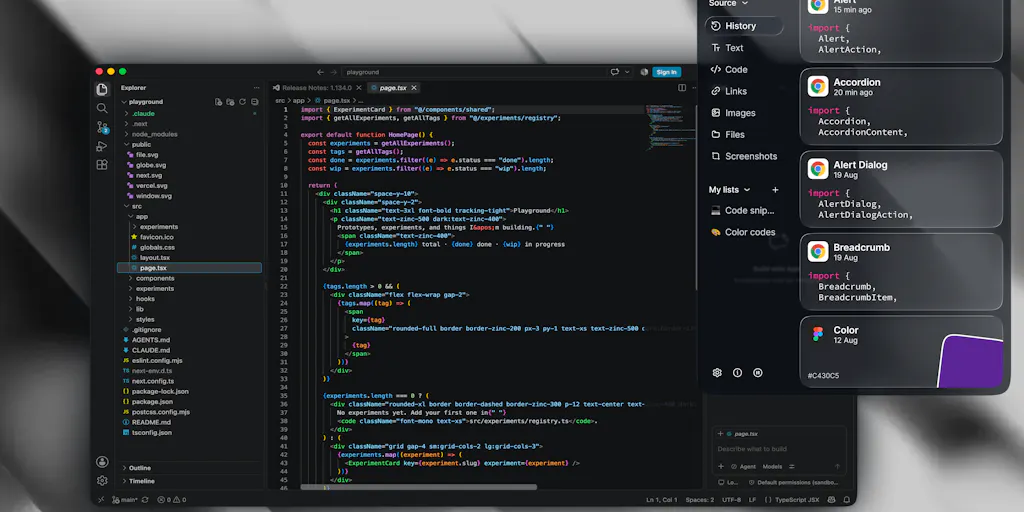
Pastea launches as a lightweight clipboard management tool designed to organize and retrieve the fragments of digital life that users accumulate daily. The product functions as a searchable repository for links, code snippets, screenshots, and text passages users copy to their clipboard.
The problem Pastea targets is simple but pervasive. Knowledge workers, developers, and researchers constantly copy and paste information across browsers, terminals, and applications. That clipboard history disappears after the next copy action. Users lose track of URLs they meant to revisit, code blocks they want to reference later, or screenshots they need for documentation. Reinstating clipboard management from scratch every time wastes cognitive energy and productivity.
Pastea's core value proposition centers on capture without friction. Instead of forcing users into a specific workflow, the tool automatically syncs clipboard activity. Users can then search through their clipboard history using keywords, timestamps, or content type. The product works across links, snippets, and screenshots, suggesting cross-platform integration that goes beyond single-use cases.
This positions Pastea in a crowded but persistently unsolved category. Existing clipboard managers like Flycut, ClipMenu, and Alfred's clipboard utility have loyal users, but adoption remains fragmented. Web-based alternatives like Pasty or command-line tools serve niche audiences. No single clipboard manager has achieved the ubiquity of other productivity utilities. This suggests room for a modern entrant that combines ease of use with robust search and organization.
The Product Hunt launch indicates Pastea is targeting early adopters and product enthusiasts first. This channel works well for developer tools and utilities where word-of-mouth spreads through technical communities. Success on Product Hunt often leads to coverage in tech media and organic traffic from builders looking for efficiency gains.
Pastea's timing aligns with broader productivity trends. Remote work, async collaboration, and information overload have made personal knowledge management a growing category. Tools like Notion, Obsidian, and Readwise have built significant audiences by helping people capture and organize information. Pastea operates at a different layer, closer to the operating system level. That positioning could make it complementary to larger note-taking platforms rather than competitive.
The product likely faces questions around data privacy and storage. Clipboard history contains sensitive information: passwords, API keys, personal messages, and confidential links. A clipboard manager must handle encryption and local storage carefully to gain user trust. Early communication about how Pastea handles data will shape adoption.
Monetization remains unclear from available information. The tool could operate on a freemium model where basic clipboard sync runs free and premium features like advanced search, cross-device sync, or extended history retention require payment. Alternatively, it could position as a subscription utility similar to other productivity tools.
Pastea enters a space where small but persistent demand exists among power users. The category hasn't seen a breakout success story in years, suggesting either that the problem lacks real commercial demand or that the right product and distribution approach hasn't yet arrived. A modern, well-designed clipboard manager with strong search capabilities and privacy-first architecture could shift that dynamic.