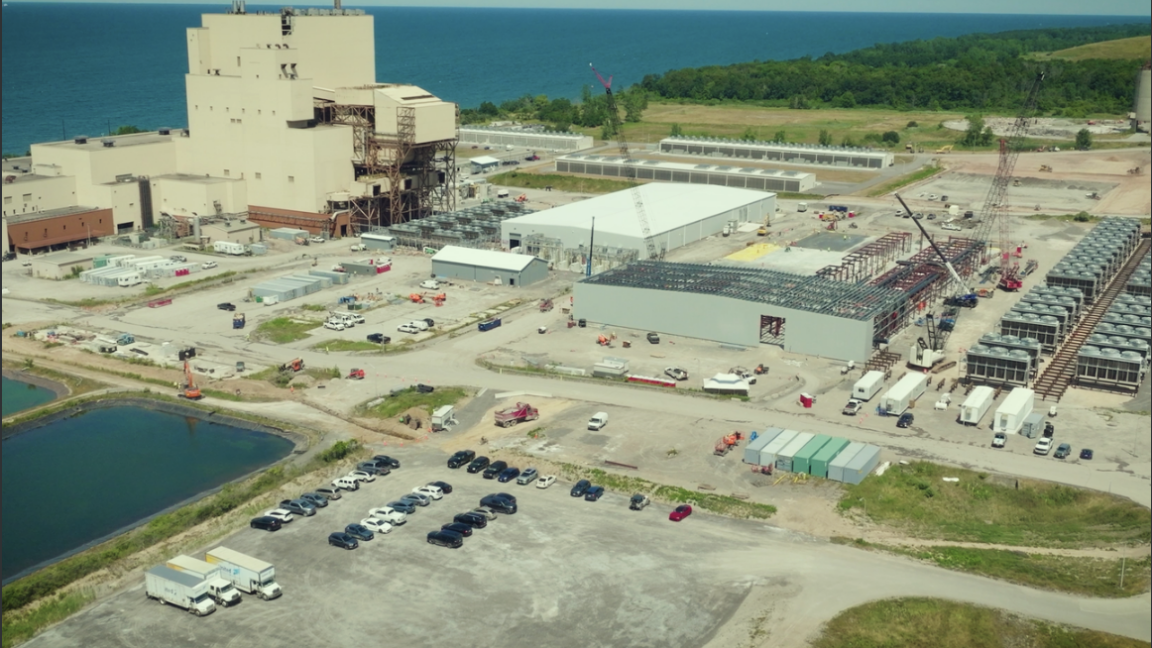
# The Complex Corporate Web Behind a $3.2 Billion AI Data Center
A $3.2 billion AI data center project reveals the murky accountability structures that emerge when multiple corporate entities collaborate on massive infrastructure builds. The arrangement raises hard questions about liability, oversight, and responsibility when things go wrong.
The setup involves a web of companies operating at different levels of the project structure. Typically, such arrangements feature a lead developer or operator, infrastructure investors, real estate owners, technology partners, and local stakeholders. Each entity holds partial control and partial risk, but lines of responsibility blur quickly when disputes arise.
This fractured accountability model has become standard in AI infrastructure development. Companies use special purpose vehicles, joint ventures, and layered partnerships to distribute both capital and risk. Meta, Microsoft, OpenAI, and other major AI players have pursued similar structures for their data center buildouts. The approach allows companies to pool resources and spread exposure across multiple balance sheets.
The problem emerges in practice. If a data center experiences environmental violations, fires, water contamination, or workforce issues, determining which entity bears legal and financial responsibility becomes litigious. Is it the operator running day-to-day systems? The owner of the land? The investor who funded construction? The local government that approved permits?
Courts have increasingly grappled with these questions. In some cases, all parties face joint liability. In others, contractual language shields certain entities while exposing others to full financial and regulatory consequences. This creates perverse incentives where the safest position is to avoid operational control entirely, outsourcing everything possible.
The $3.2 billion project appears typical of modern AI infrastructure finance. Major AI companies need computing capacity faster than they can build it alone. They partner with real estate firms, financial sponsors, and technology operators to accelerate deployment. Each partner brings different expertise and capital sources. The structure looks elegant on paper: specialized expertise, risk distribution, faster execution.
But execution reveals problems. Environmental compliance becomes a coordination challenge across entities with different risk tolerances and profit incentives. A real estate partner cares most about keeping the facility operational and generating returns. An AI company cares about computing availability and cost. An operator cares about maintaining systems within budget. When environmental regulations tighten or local opposition mounts, each entity points fingers at others.
The arrangement also creates information asymmetry. A local government approving the project may not fully understand which corporate entity handles water discharge, power sourcing, or worker safety. They sign off on permits with one entity, then that entity subcontracts to others. Accountability dilutes through the chain.
States and local governments are beginning to push back. Some now require single-entity responsibility clauses. Others demand that lead investors maintain parent company guarantees backing all operations. These changes add friction to deal structures but force clarity about who actually bears consequences.
The AI industry's rapid infrastructure expansion has outpaced regulatory frameworks designed for more straightforward single-operator models. As data centers grow in scale and impact, the complexity of corporate structures behind them will continue creating disputes over responsibility. Projects like this $3.2 billion facility serve as test cases for how law and regulation adapt to distributed corporate accountability.