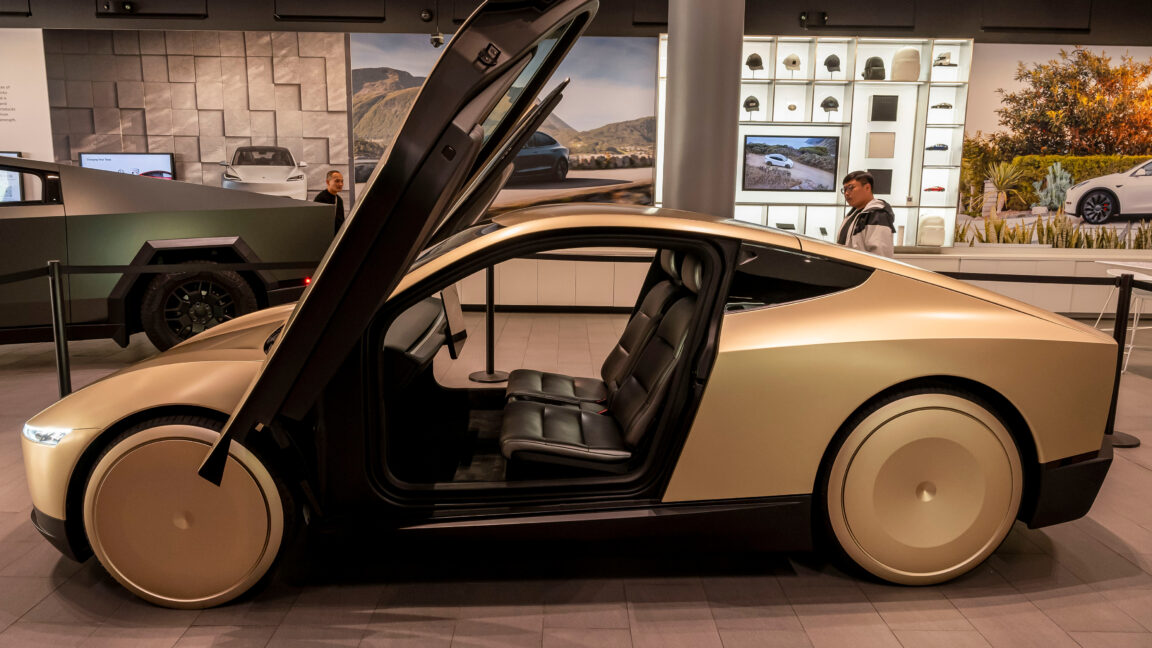
Tesla's Cybercab robotaxi has hit the road, and federal regulators are already scrutinizing it. The U.S. government launched an investigation into whether the vehicle meets established safety standards, signaling early friction between Elon Musk's autonomous ambitions and the National Highway Traffic Safety Administration (NHTSA).
The probe addresses a fundamental tension in the autonomous vehicle industry. Tesla has positioned the Cybercab as a fully driverless vehicle with no steering wheel or pedals, a radical departure from the incremental autonomy approach adopted by competitors like Waymo and Cruise. That design choice, while attention-grabbing, creates regulatory questions NHTSA must answer before wide deployment becomes possible.
The Cybercab investigation matters because it sets a precedent for how federal regulators handle next-generation robotaxis. Tesla has not yet obtained specific federal approval for driverless operation at scale, though the company has been testing autonomous systems in limited deployments. The NHTSA review will likely examine crash test data, sensor reliability, backup systems, and cybersecurity protections. These are the basic foundations any manufacturer must clear before regulators authorize mass-market robotaxi fleets.
Tesla's timeline for Cybercab commercialization has been characteristically optimistic. Musk previously suggested the vehicle would enter production in the mid-2020s, but the regulatory investigation introduces real uncertainty into that roadmap. The company will need to demonstrate that removing driver controls doesn't compromise safety outcomes, a burden no competitor has fully overcome yet.
Waymo, which operates autonomous rides in San Francisco, Phoenix, and Austin through deliberate expansion, faced similar regulatory hurdles. The company spent years validating its sensors, software, and operational safety protocols with agencies like NHTSA and the California Department of Motor Vehicles. Cruise, meanwhile, withdrew its robotaxi service after a pedestrian collision in San Francisco in 2023, underscoring how quickly public trust evaporates when safety questions surface.
Tesla's approach differs sharply. The company has historically moved fast and assumed it would win regulatory approval through demonstrated capability rather than pre-approval validation. That strategy works for software iterations but becomes riskier with physical vehicles operating in public spaces. A serious incident involving the Cybercab could accelerate regulatory crackdowns across the entire autonomous vehicle sector.
The investigation also reflects broader NHTSA skepticism toward Tesla's safety claims. The agency has previously opened probes into Tesla's Autopilot system following crash reports, and multiple consumer complaints about sudden unintended acceleration have drawn scrutiny. An investigation into the Cybercab builds on that institutional wariness.
What happens next depends on what NHTSA finds. If the agency determines the Cybercab meets existing safety standards, Tesla gains a regulatory green light for limited deployments. If critical gaps emerge, the company faces costly redesigns or acceptance that the driverless vehicle market will develop slower than Musk anticipated.
The robotaxi market remains years away from mainstream adoption. Waymo currently operates the most mature commercial service, but availability remains geographically limited and demand verification remains incomplete. Tesla's Cybercab investigation will help determine whether the company can accelerate that timeline or whether regulation will force convergence toward more conservative designs that retain human controls.