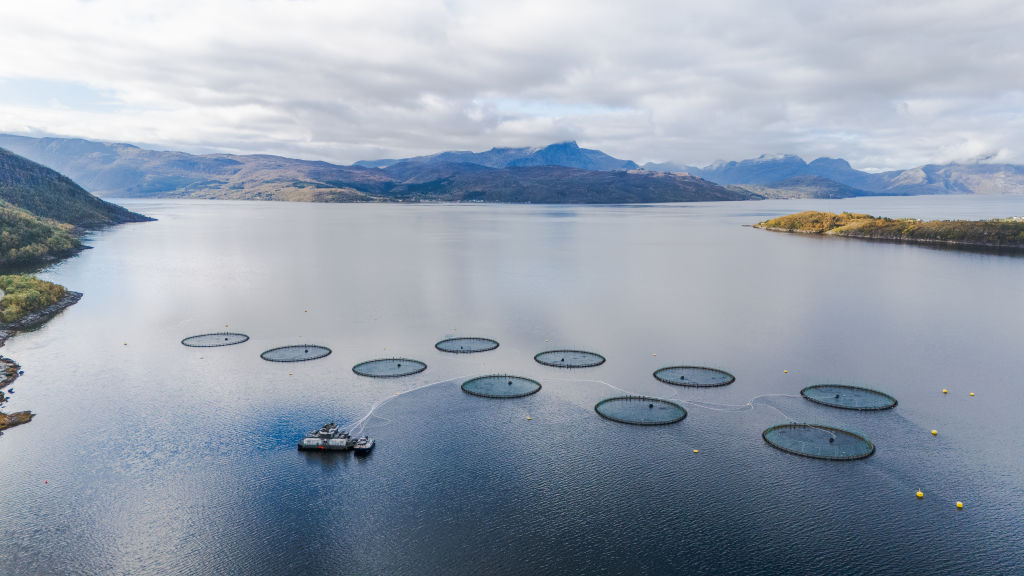
Farmed salmon's nutritional profile has degraded over decades as feed composition changed, according to new research examining the long-term health impacts of industrial aquaculture practices.
Scientists found that farmed salmon contains lower levels of omega-3 fatty acids and other key nutrients compared to wild salmon and compared to farmed salmon from earlier decades. The culprit lies in what feeds producers use. Modern salmon farms increasingly rely on plant-based oils and meals instead of fish meal and fish oil derived from wild-caught forage fish. While this shift reduced costs and improved sustainability metrics around wild fish depletion, it fundamentally altered the nutritional content of the final product consumers purchase.
The research carries implications across multiple industries. Salmon farming represents a $20+ billion global market, with Norway, Chile, and Canada dominating production. Major retailers and food companies market farmed salmon explicitly for its health benefits, particularly omega-3 content. If that nutritional advantage shrinks, the value proposition shifts. Health-conscious consumers who pay premium prices for salmon over cheaper proteins lose a core reason to do so.
Producers face a paradox. Using fish meal and oil as feed perpetuates overfishing of species like anchovies and sardines, destroying ecosystems and threatening wild stocks. Plant-based alternatives address overfishing but create nutritionally inferior products. Some companies experiment with algae-based feeds that mimic the omega-3 profile of fish oil, but scaling remains expensive.
The environmental angle extends beyond feed sourcing. Farmed salmon operations generate substantial waste, pollute coastal waters, and escape into wild populations where they compete with native species. Lower nutritional value per farmed salmon might actually incentivize farms to produce more volume to meet demand, potentially worsening environmental damage rather than improving it.
This research arrives as consumer awareness of aquaculture practices intensifies. Documentaries and investigative reporting have highlighted escapes, disease outbreaks, and chemical use in salmon farms. Retailers including Whole Foods and major restaurant chains face growing pressure from customers demanding transparency on sourcing and production methods.
The findings also matter for investors in alternative protein and precision fermentation companies. Lab-grown salmon and plant-based seafood alternatives market themselves partly on nutritional equivalence or superiority to farmed salmon. If farmed salmon's nutritional reputation deteriorates, these alternative proteins gain competitive ground.
Feed technology companies now face a specific technical challenge. Creating plant-based or algae-based feeds that deliver wild-salmon-level nutrition at farm-scale economics becomes a genuine business opportunity. Companies developing microalgae cultivation for omega-3 production or biofortified plant proteins could capture significant value if they crack cost parity with current feed options.
For consumers, the gap between farmed and wild salmon widens. Wild salmon commands higher prices partly because it contains superior nutrition. If farmed salmon loses that nutritional foundation entirely, the price premium for wild fish becomes harder to justify on health grounds alone. That dynamic could reshape both wild fisheries management and farmed salmon economics within the next five to ten years.