Stanford University is operating 37,000 AI agents as a distributed virtual biotech lab, and the approach is already producing tangible results. One drug design generated by this multi-agent system received independent validation from Merck, validating the scalability of collaborative AI beyond single-agent workflows.
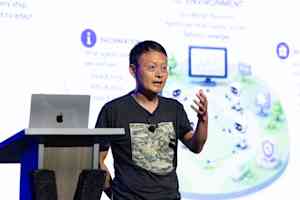
James Zou, associate professor of biomedical data science at Stanford, presented the research at VB Transform 2026, arguing that the next era of AI development moves beyond the current paradigm of one engineer paired with one AI agent. Instead, orchestrating tens of thousands of agents working in concert represents the frontier.
The breakthrough lies in how Stanford structured these collaborations. Zou's team built practical infrastructure connecting legacy databases to AI orchestration layers, then designed environments enabling thousands of agents to operate simultaneously. The system mimics organizational structures, allowing agents to specialize, share findings, and iterate on complex problems like drug discovery.
This approach addresses a real limitation in current AI tooling. While Claude Code and similar single-agent systems excel at individual tasks, they lack the collaborative framework for large-scale scientific challenges. Drug discovery typically requires multiple teams working simultaneously across chemistry, biology, and clinical domains. Stanford's distributed agent model replicates that parallel workflow.
The Merck validation matters considerably. Independent confirmation of a computationally designed drug demonstrates that multi-agent systems can produce outputs reliable enough for pharma industry validation. This isn't theoretical capability. It's production-grade results.
For product builders and developers, the technical implication is clear. The architecture for scaling AI work exists now. It requires connecting multiple data sources, designing agent specializations, and building orchestration layers that manage thousands of parallel operations. Stanford's blueprint offers a roadmap that extends beyond biotech into any domain requiring distributed expertise.
This work hints at where AI infrastructure heads next. After the single-agent period, collaborative swarms become the competitive advantage. Companies